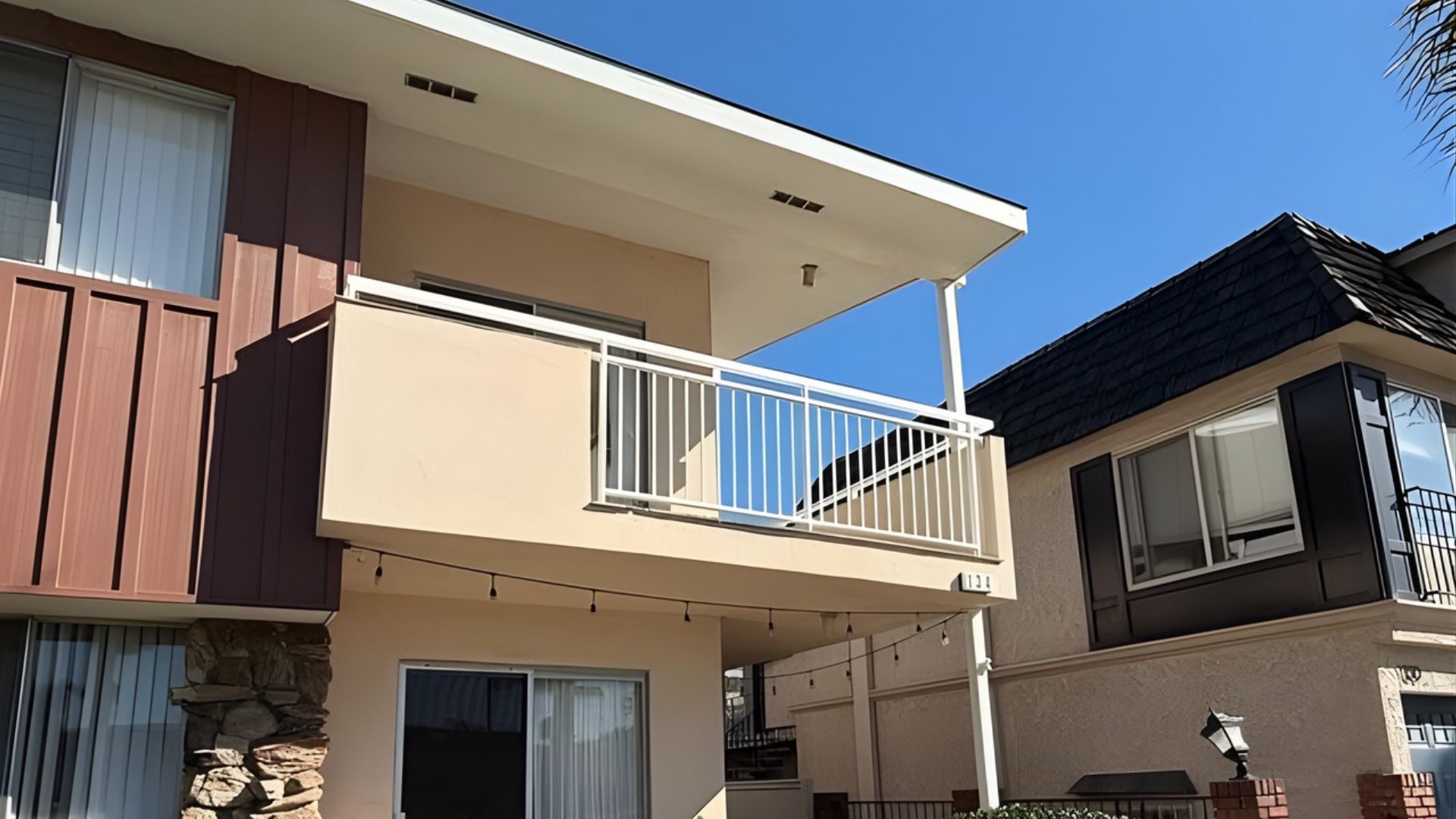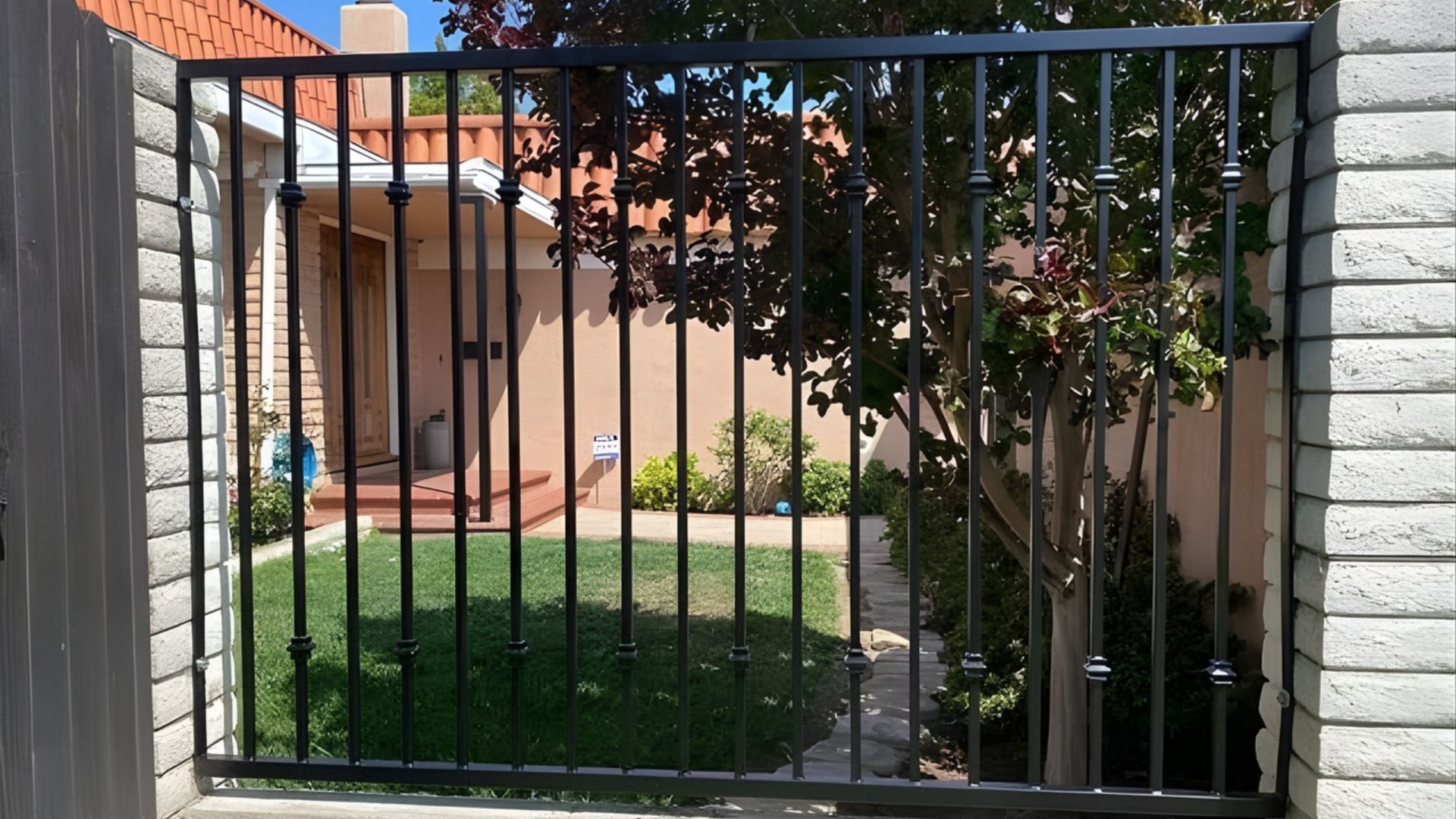
You’re hosting a summer BBQ in Huntington Beach, but every laugh and conversation feels half-exposed to the neighbor’s patio, and that open sightline kills the vibe. That’s the reality many homeowners face: privacy isn’t just about seclusion, it’s about feeling at ease in your own yard.
A modern privacy fence isn’t just decorative; it can transform how you use your outdoor space and how your home feels every day.
Here’s an eye-opening fact: a well-installed privacy fence can add up to 30–70% of its cost back in home value and make your property more appealing to future buyers.
In this guide, we’re not talking generic panels. We’re talking modern privacy fence ideas that solve real problems: seclusion, durability, design harmony, and long-term value.
Quick Take:
Privacy Is About Sightlines, Not Just Height: Modern privacy fencing works best when it blocks real viewing angles rather than relying on generic fence heights.
Material Choice Determines Longevity: The right metals and treatments matter more than style when it comes to durability and long-term performance.
Design Should Match How the Yard Is Used: Different layouts call for different solutions, from side yards to patios and perimeter lines.
Custom Fabrication Outperforms Prefab: Fences built to fit the property maintain alignment, spacing, and appearance over time.
Early Expert Input Prevents Costly Compromises: Reviewing options with an experienced fabricator helps ensure the final design performs as intended.
What Homeowners Really Want From a Modern Privacy Fence
Most homeowners don’t start their search wanting “a fence.” They start because something isn’t working. Neighbors can see straight into the yard. Wood panels are warping after a few seasons. Salt air is eating away at metal. Or an HOA rejection letter just landed in the mailbox.
A modern privacy fence becomes the solution only when it solves these everyday frustrations without creating new ones.
Here’s what homeowners consistently care about, and why it matters in real life.
Clean, modern lines
You want a fence that feels intentional, not like an afterthought. Straight lines, balanced spacing, and minimal profiles help the fence blend with modern architecture instead of overpowering it.
Increased backyard privacy
True privacy isn’t just height; it’s sightline control. The right spacing and orientation block views where people actually look, so you can relax, entertain, or work outside without feeling watched.
Low-maintenance materials
No one wants to repaint or replace panels every few years. Materials that resist warping, rust, and fading save time, money, and frustration long after installation.
Coastal-safe durability
In coastal areas, salt air and sun exposure destroy standard materials fast. A modern privacy fence should be built to survive those conditions, not fight them.
HOA-friendly designs
Approval matters. Clean, compliant designs prevent delays, redesigns, and surprise rejections that stall your project.
Custom sizing & layouts
Yards aren’t standard rectangles. Custom sizing ensures privacy where you need it most, along patios, pools, or side yards without wasting material.
Professional installation over DIY
A fence that looks good on day one but shifts, rattles, or fails inspection isn’t a win. Professional installation ensures longevity, safety, and clean finishes that hold up over time.
If you’re already considering a fence upgrade, early guidance from an experienced fabricator like Pacific Wood & Iron can help clarify design options before any decisions are locked in.
With those priorities in mind, here are 7 modern privacy fence ideas that solve real privacy, durability, and design challenges for private yards.
7 Modern Privacy Fence Ideas for a Private Yard
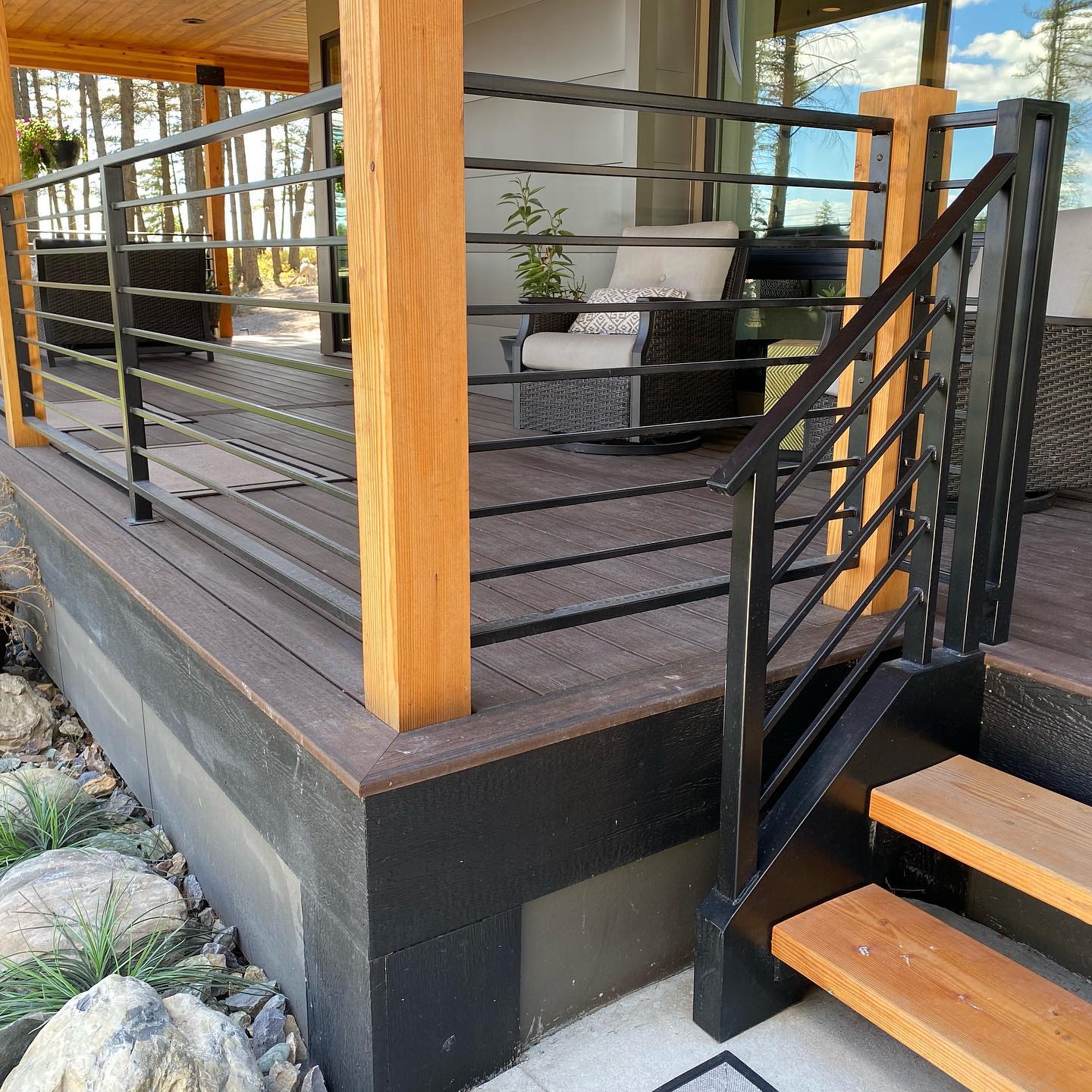
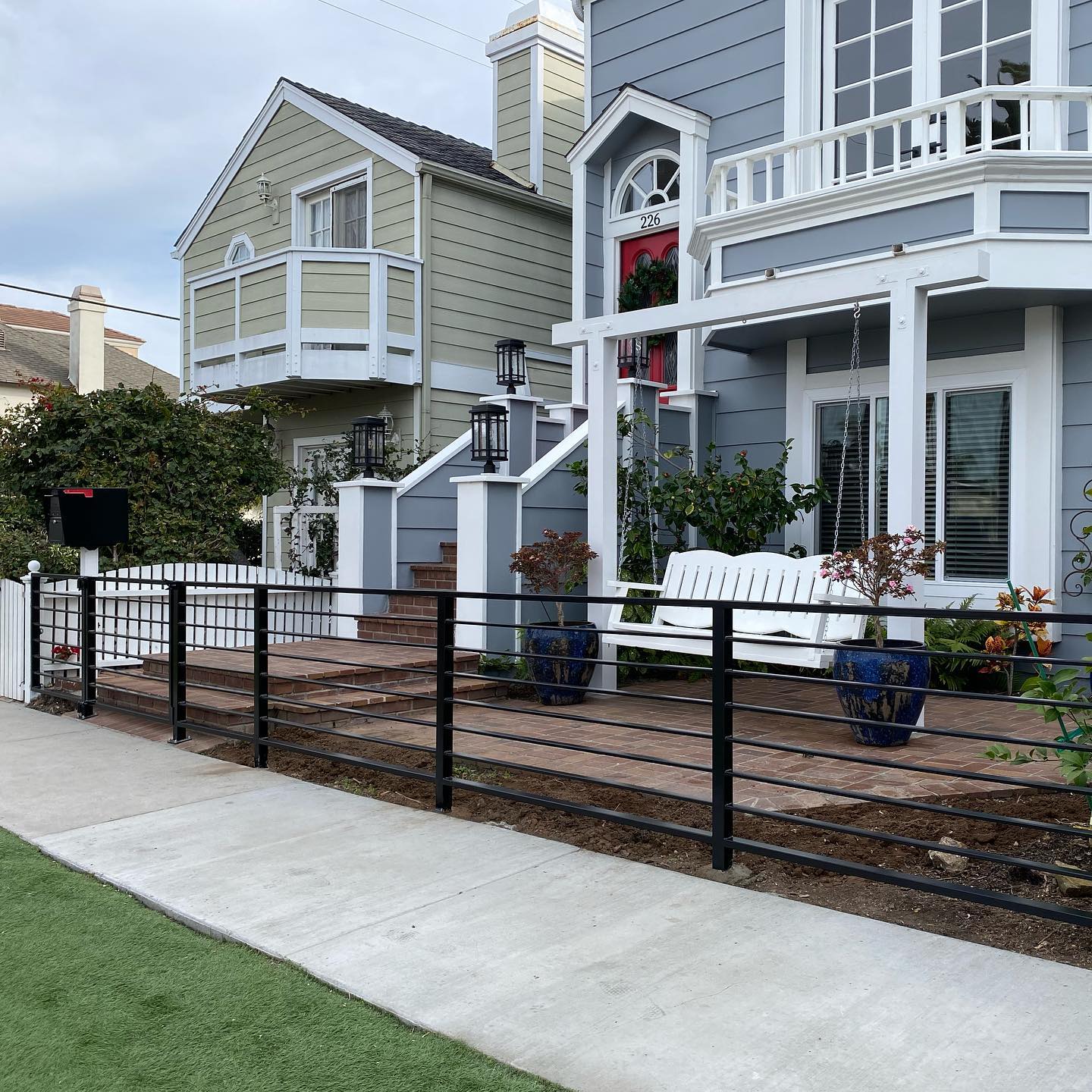
Modern privacy fencing is as much about proportion, material choice, and spacing as it is about height. The following 7 modern privacy fence ideas focus on clean lines, intentional layouts, and materials that work together to create privacy without making a yard feel closed in.
1. Horizontal Metal Privacy Fences
Horizontal metal privacy fencing uses evenly spaced metal slats installed parallel to the ground, creating a continuous visual barrier with controlled sightlines. The emphasis is on alignment, spacing, and material consistency rather than ornamentation.
Why Homeowners Choose It
This design solves the common issue of feeling exposed without making a yard feel boxed in. Horizontal orientation naturally follows the eye, which helps the space feel wider while still limiting direct views.
Compared to traditional vertical fencing, metal holds its shape, resists warping, and maintains consistent spacing over time, which is key to keeping the fence functional and visually balanced.
Best for:
Side yards, property lines, and patios where sightlines matter most
Modern or contemporary home exteriors
Coastal properties where wood deterioration is a concern
Narrow lots that benefit from a visually expansive layout
Design & Material Considerations
Slat spacing controls visibility and airflow; tighter spacing increases privacy
Powder-coated steel or aluminum offers long-term resistance to corrosion
Height should align with sightline exposure rather than default fence limits
Custom-fabricated panels ensure uniform gaps and clean terminations at corners and slopes
2. Wood & Iron Hybrid Privacy Fences
Wood and iron hybrid privacy fences combine solid wood infill with a metal frame, allowing each material to do what it does best. The structure comes from iron, while wood panels provide visual warmth and controlled privacy.
Why Homeowners Choose It
This design balances privacy with architectural character, offering a warmer alternative to all-metal fencing without sacrificing structural stability or longevity.
Best for:
Backyards, patios, and pool areas where a softer visual feel is preferred
Homes blending modern and natural design elements
Remodels where existing wood features need to be visually tied together
Properties where full solid fencing would feel too heavy
Design & Material Considerations
Wood species and treatment affect longevity and maintenance cycles
Iron framing prevents warping and sagging common in all-wood fences
Panel spacing can be adjusted for airflow without fully opening sightlines
Custom fabrication ensures clean transitions between materials and consistent alignment
3. Slatted Steel Privacy Panel Fencing
Slatted steel privacy panel fencing uses vertical or horizontal steel slats assembled into modular panels, creating a uniform barrier with precise, repeatable spacing. The design relies on consistency and structure rather than decorative elements.
Why Homeowners Choose It
This option offers strong visual privacy with a more architectural feel than traditional fencing. Steel panels maintain exact spacing over time, making them a reliable solution where alignment and long-term performance matter.
Best for:
Property lines and perimeter fencing
Side yards with direct neighboring views
Modern homes with flat or angular architecture
Yards requiring consistent privacy across long spans
Design & Material Considerations
Slat width and spacing directly control visibility and airflow
Galvanized and powder-coated finishes improve corrosion resistance
Panel-based layouts simplify alignment across slopes and grade changes
Custom-built panels prevent the inconsistencies common with prefabricated systems
4. Mixed-Material Privacy Walls (Metal + Wood + Concrete)
Mixed-material privacy walls combine metal framing, wood panels, and concrete or masonry elements into a single, integrated structure. Each material serves a distinct role, creating a layered barrier that feels intentional rather than improvised.
Why Homeowners Choose It
This approach allows privacy, structure, and visual weight to be distributed where they’re actually needed, instead of relying on a single material to do everything.
Best for:
Large backyards or corner lots with multiple exposure points
Homes with strong architectural features or modern hardscaping
Properties needing both visual screening and sound buffering
Projects where the fence is designed as part of the landscape
Design & Material Considerations
Concrete elements add stability and reduce movement over time
Wood panels soften the visual mass and introduce contrast
Metal framing keeps materials aligned and structurally independent
Custom construction is essential to manage expansion, drainage, and clean transitions
5. Modern Wrought Iron Fences With Privacy Infill
Modern wrought iron fences with privacy infill combine a traditional iron framework with integrated solid or semi-solid panels. The iron provides structure, while the infill controls visibility without relying on decorative patterns.
Why Homeowners Choose It
This design offers privacy without fully closing off the yard, maintaining openness and security while reducing direct sightlines.
Best for:
Front or side yards where full solid fencing feels too closed
Homes needing a balance between visibility and screening
Properties where security and access control matter
Remodels updating older iron fencing without full replacement
Design & Material Considerations
Infill materials can range from metal panels to wood or composite inserts
Panel height and placement determine how much privacy is achieved
Iron framing allows airflow and visibility above or below infill zones
Custom fabrication ensures infill integrates cleanly without retrofitted gaps
6. Architectural Aluminum Privacy Fencing
Architectural aluminum privacy fencing uses lightweight aluminum profiles arranged in slats or panels to form a structured, modern boundary. The system focuses on precision, clean edges, and uniform spacing rather than heavy mass.
Why Homeowners Choose It
Aluminum offers long-term stability with minimal upkeep, making it a practical option where consistent appearance over time matters more than material weight.
Best for:
Coastal and high-exposure environments
Homes with contemporary or minimalist architecture
HOA-regulated neighborhoods requiring clean, uniform designs
Yards where low maintenance is a priority
Design & Material Considerations
Aluminum resists rust and corrosion better than most metals
Powder-coated finishes improve color retention and surface durability
Slat orientation and spacing affect both privacy and airflow
Custom-fabricated systems avoid the flex and misalignment common in prefab panels
7. Fully Custom Modern Privacy Fence Designs
Fully custom modern privacy fences are designed and fabricated from the ground up to match the property’s layout, architecture, and exposure. Materials, spacing, and proportions are defined by function, not by pre-set panel sizes.
Why Homeowners Choose It
Custom design eliminates compromises, allowing privacy, structure, and aesthetics to work together instead of forcing a standard solution onto a non-standard yard.
Best for:
Yards with complex layouts, slopes, or multiple exposure points
Homes with distinct architectural styles or custom finishes
Properties where prefab fencing falls short visually or structurally
Homeowners planning long-term improvements rather than quick fixes
Design & Material Considerations
Material selection is based on climate, use, and maintenance tolerance
Heights and spacing are tailored to actual sightlines, not defaults
Integrated gates and transitions maintain visual continuity
Custom fabrication ensures precision, consistency, and long-term performance
At this stage, many homeowners find it helpful to review their yard layout and sightlines with a fabricator like Pacific Wood & Iron before locking in a fence style.
Choosing between these options becomes much easier when you step back and match the design to how your yard is actually used.
How to Choose the Right Modern Privacy Fence Style
Instead of comparing fence styles one by one, use the table below to match how you use your yard with the type of privacy solution that fits best. This narrows choices fast and avoids overdesigning or underbuilding.
If this sounds like you… | Focus on this design priority | Fence styles that usually fit |
You want privacy where you sit, not a solid wall everywhere | Sightline control at seating height | Horizontal metal fencing, wood & iron hybrids |
You prefer clean, minimal design over visual texture | Consistent lines and uniform spacing | Slatted steel panels, architectural aluminum |
You don’t want ongoing upkeep | Material stability and finish longevity | Aluminum fencing, steel panel systems |
Your yard has multiple exposure points | Layout-driven, custom proportions | Mixed-material walls, fully custom designs |
You want the fence to feel architectural | Material contrast and structure | Wood & iron hybrids, mixed-material walls |
You want it to blend into the background | Simplicity and restraint | Horizontal metal, aluminum profiles |
Tip: The best choice usually balances how visible the fence should be with how much attention you want to give it over time. When those two align, the design decision becomes much easier.
Once you have a clearer idea of the style that fits your space and priorities, the next step is making sure it’s executed correctly from design through fabrication.
How Pacific Wood & Iron Helps Homeowners Build the Right Modern Privacy Fence
Design ideas only work when they’re executed with precision, experience, and an understanding of real site conditions. For homeowners in Huntington Beach, Newport Beach, and Seal Beach, the difference comes down to working with a fabricator who treats a modern privacy fence as a permanent architectural element, not a commodity install.
Pacific Wood & Iron supports clients through every critical stage of the process, with a focus on results that hold up visually and structurally over time.
What sets their approach apart:
Custom fabrication — not pre-made panels
Every fence is built to fit the property’s layout, sightlines, and elevations rather than forcing standard panel sizes into place.
Experience with coastal conditions
Materials and finishes are selected to perform in salt air, sun exposure, and fluctuating coastal moisture without premature failure.
Design-driven approach
Proportions, spacing, and material combinations are planned to complement modern homes instead of competing with them.
Compliance with local codes & HOAs
Fence height, placement, and design details are aligned with local requirements to avoid delays or rework.
High-end materials only
Steel, aluminum, and wood are chosen for consistency, stability, and long-term performance, not short-term cost savings.
Precision installation
Clean terminations, consistent spacing, and proper anchoring ensure the fence performs as intended year after year.
Focus on long-term durability, not shortcuts
The goal isn’t just how the fence looks at install, but how it holds its line, finish, and function over time.
Homeowners planning a modern privacy fence can request a quote or schedule a call to review design options, materials, and site conditions before finalizing a solution.
Conclusion
A modern privacy fence works best when it’s designed around real use, not trends or prefab limitations. This guide goes beyond visual inspiration by explaining how layout, material choice, and spacing affect privacy, maintenance, and long-term performance.
When you’re ready to move from ideas to execution, Pacific Wood & Iron helps homeowners translate the right design choice into a custom-built solution that’s precise, durable, and built to last.
FAQs
1. Will a modern privacy fence make my yard feel smaller?
Not if it’s designed correctly. Horizontal layouts, controlled spacing, and lighter materials can actually make a yard feel wider while still blocking direct sightlines.
2. Can a modern privacy fence block views without fully closing off airflow?
Yes. Slatted and hybrid designs are often used to limit visibility while allowing air to move through, which is especially useful in warm or coastal environments.
3. How do I know if a modern privacy fence will age well over time?
Longevity depends more on material selection and fabrication quality than on the style itself. Metals that resist corrosion and properly treated wood hold their form far better than standard panels.
4. Is a modern privacy fence a good investment if I plan to sell later?
A well-designed modern privacy fence can improve perceived property value by enhancing privacy, security, and overall curb appeal without feeling dated.
5. Should I design a modern privacy fence around my house or my neighbors’ sightlines?
Neighbors’ sightlines matter more. Designing around actual viewing angles leads to better privacy outcomes than relying on standard fence heights or layouts.