When you think about outdoor staircases on a coastal property, the railing isn't just a finishing touch. It's a structural element that must perform, not just look good.
In coastal environments like Huntington Beach and Newport Beach, salt air and marine exposure dramatically accelerate the deterioration of metal components compared with inland conditions.
The ocean constantly produces sea spray, microscopic salt particles carried on onshore winds, that settle on exterior metalwork and accelerate oxidation, especially where moisture and oxygen are present. This environmental stress is a major reason why railings, fasteners, and connectors often fail long before their expected service life when used on coastal steps.
For homeowners and builders in coastal cities, design and material selection are just as important as aesthetics. This guide offers inspiring outdoor staircase railing ideas grounded in real performance challenges and customized to coastal living - not generic inspiration pulled from boards or catalogs.
Key Takeaways
Coastal conditions demand specialized railings. Salt air and moisture can cause exterior stair railings to deteriorate far faster than inland installations, making standard "outdoor" solutions unreliable near the coast.
Good design prevents premature failure. Clean profiles, proper drainage, and smart anchoring often matter more than style when it comes to long-term durability in coastal environments.
Material selection directly impacts lifespan. Marine-grade metals, high-quality coatings, and correct finish systems are essential for outdoor staircase railings exposed to salt air and sun.
Custom railings outperform off-the-shelf options. Purpose-built outdoor stair railings last longer, require less maintenance, and maintain curb appeal far better than generic systems.
Pacific Wood and Iron builds railings specifically for coastal homes. Based in Huntington Beach, their certified, craftsman-led approach focuses on outdoor stair railings engineered for real coastal exposure.
What Makes Outdoor Staircase Railings Different for Coastal Homes?
Outdoor staircase railings near the coast face a very different set of challenges than inland installations. In cities like Huntington Beach and Newport Beach, environmental exposure is a design constraint, not a secondary consideration.
Key Factors That Impact Coastal Outdoor Stair Railings:
Accelerated corrosion:
Airborne salt and moisture can cause metal components to corrode 5–10× faster near the shoreline compared to inland areas. Measurable differences in corrosion rates can be seen within just a few hundred feet of the coast.
Constant salt and moisture exposure:
Salt particles carried by onshore winds settle on exterior metal surfaces. Salt is hygroscopic, meaning it attracts and retains moisture, keeping metal surfaces wet longer and accelerating oxidation.
Material performance varies dramatically
Standard carbon steel deteriorates quickly if not adequately protected. Marine-grade stainless steel and properly coated iron perform significantly better in chloride-rich environments.
Design details affect longevity
Horizontal surfaces and tight joints trap salt and moisture. Poor drainage and untreated fasteners often become early failure points. Dissimilar metals without proper isolation accelerate corrosion.
Safety and durability are linked
Outdoor stair railings must meet code, but in coastal homes, they must also be engineered for environmental exposure. Early design and fabrication choices often determine whether a railing lasts decades or just a few years.
For coastal properties, outdoor staircase railings aren't just decorative elements. They are long-term exterior systems that must be designed, fabricated, and finished specifically for the environment in which they'll be exposed.
Once those coastal constraints are clear, the focus shifts to solutions. Let's explore some of the best outdoor staircase railing ideas that work with the environment, not against it.
Modern Outdoor Staircase Railing Ideas That Work in Coastal Environments
Modern design works exceptionally well for coastal homes, but only when the railing system is engineered for exposure. The following outdoor staircase railing ideas are popular in coastal properties because they balance clean aesthetics, structural safety, and long-term durability.
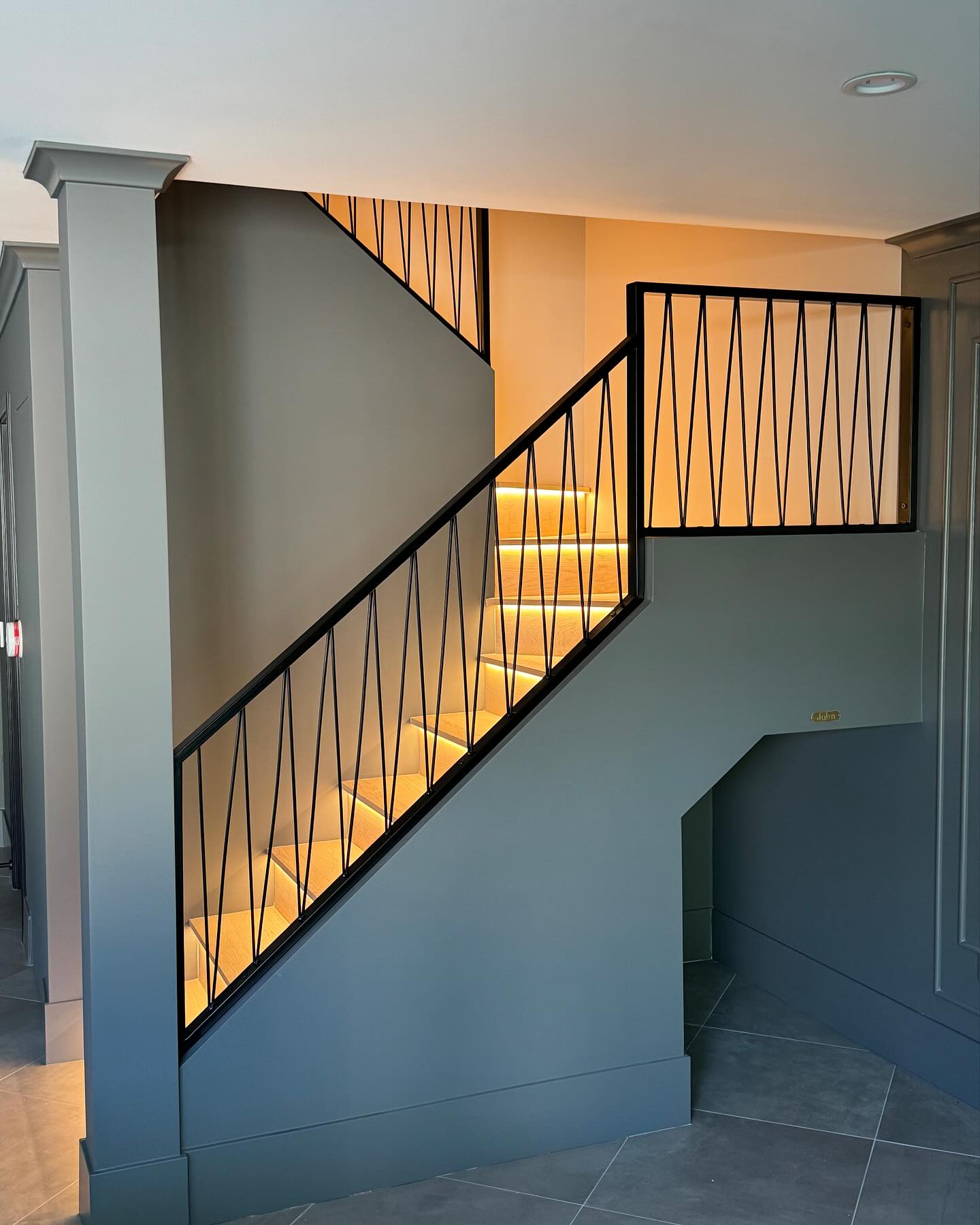
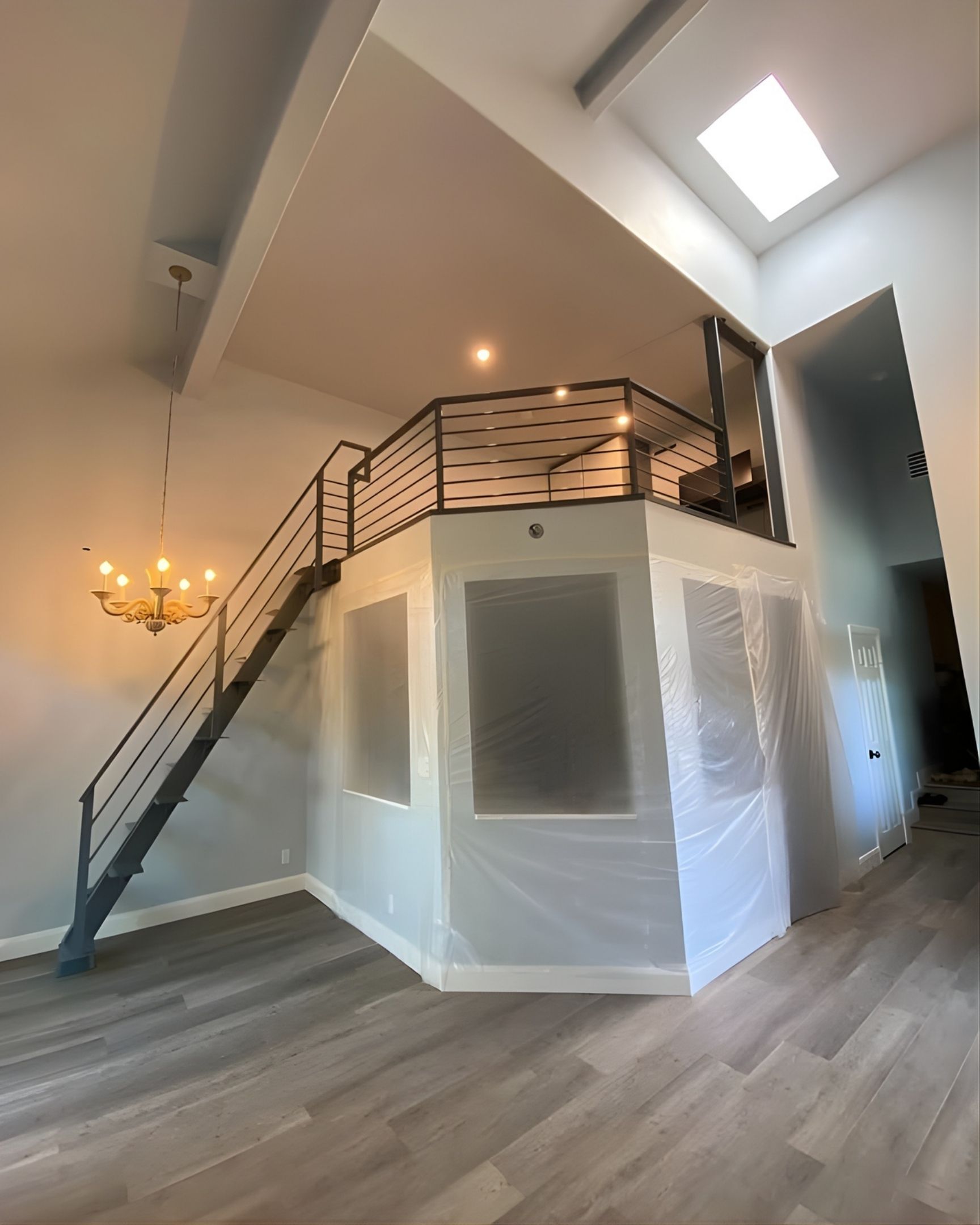
1. Modern Iron Railings with Architectural Lines
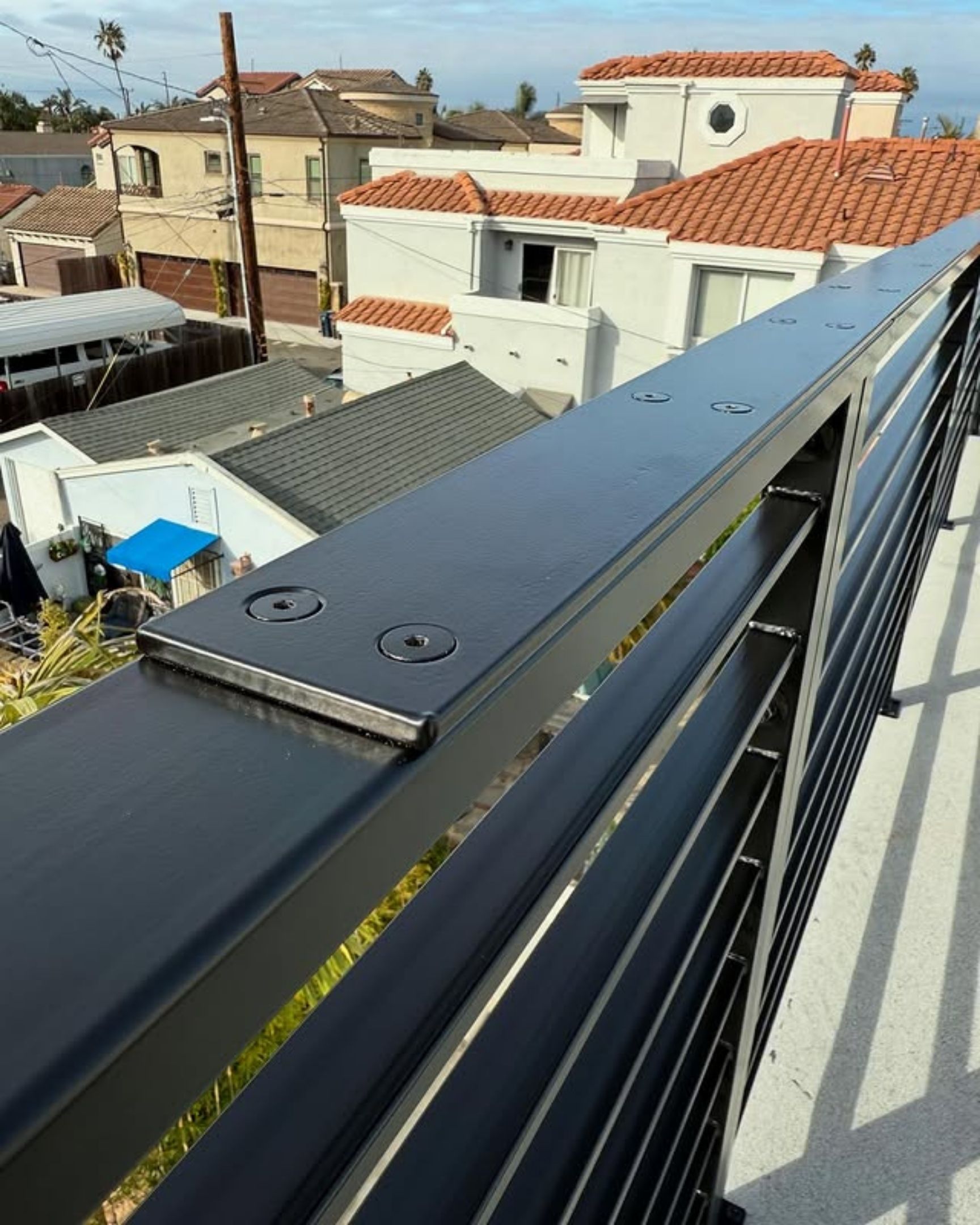
Minimalist iron railings are one of the most reliable and visually adaptable options for coastal staircases.
Why they work:
Simple profiles reduce areas where salt and moisture collect
Fewer decorative elements mean fewer corrosion-prone joints
Clean lines complement modern and transitional coastal architecture
Best suited for:
Contemporary homes
Exterior entry staircases
Side-yard or backyard stair access where durability matters more than ornamentation
2. Wood and Iron Integrated Outdoor Stair Railings
Wood-and-iron designs remain a top choice for property owners who want warmth without sacrificing strength.
Why this combination works near the coast:
Iron provides structural integrity and code compliance
Wood softens the appearance and ties into the decking or siding
Proper separation and sealing prevent moisture transfer between materials
Best suited for:
Luxury coastal homes
Front entry staircases
Homes where exterior railings are a visual focal point
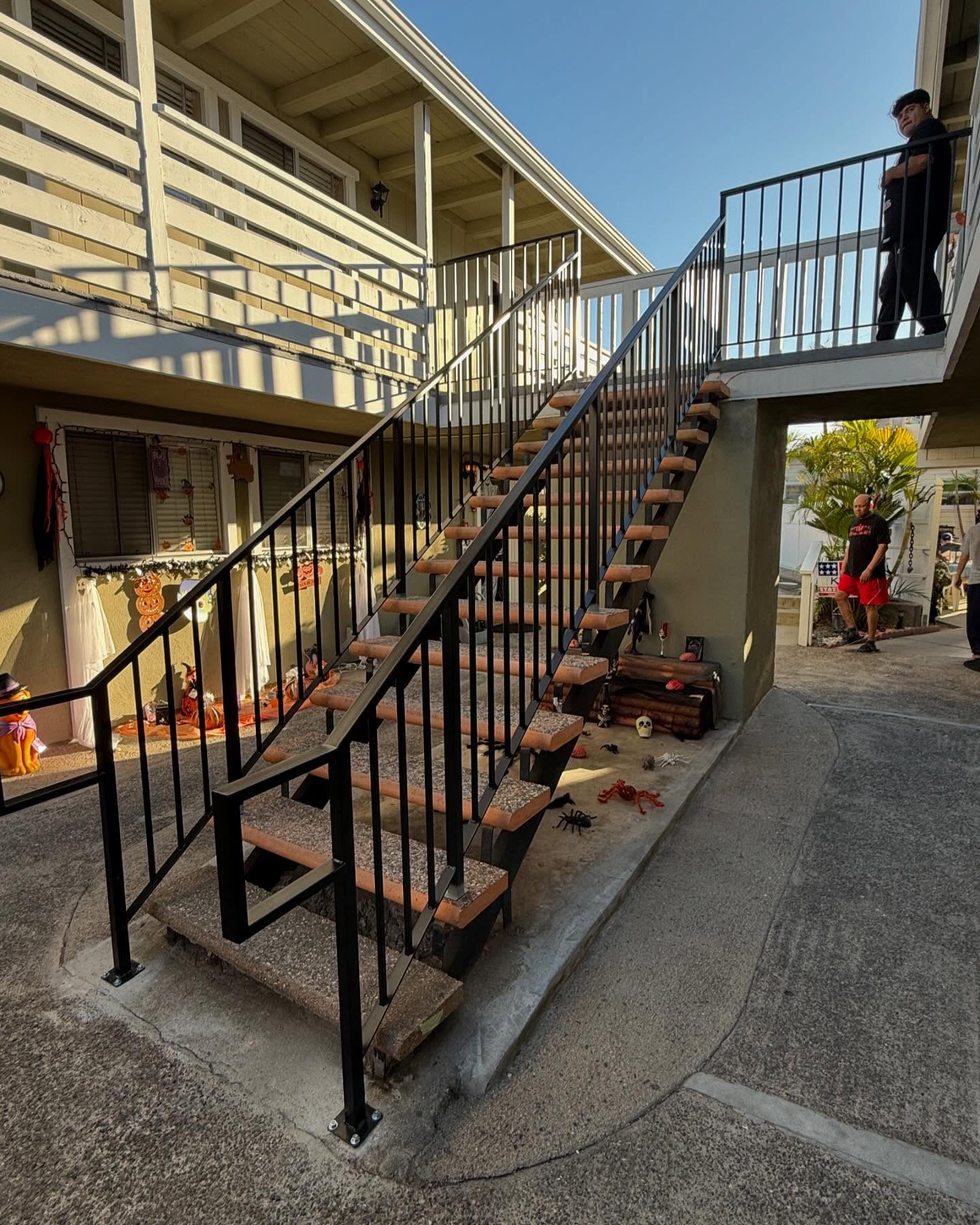
3. Modernized Wrought Iron Stair Railings
Traditional wrought iron can still work in coastal settings when the design is updated, and fabrication standards are high.
What makes it coastal-appropriate:
Open designs improve airflow and drying time
Reduced scrollwork minimizes salt entrapment
Heavier-gauge material resists long-term surface degradation better than thin decorative iron
Best suited for:
Homes blending classic and modern design
Exterior staircases visible from the street
Properties where fencing, gates, and stair railings need to align visually
If you're drawn to any of these modern outdoor staircase railing ideas but aren't sure which designs will actually hold up near the coast, working with a fabricator who understands salt exposure and material performance can save years of frustration.
Pacific Wood and Iron helps homeowners translate design inspiration into railings explicitly engineered for coastal conditions.
Outdoor Stair Railing Ideas by Property Type
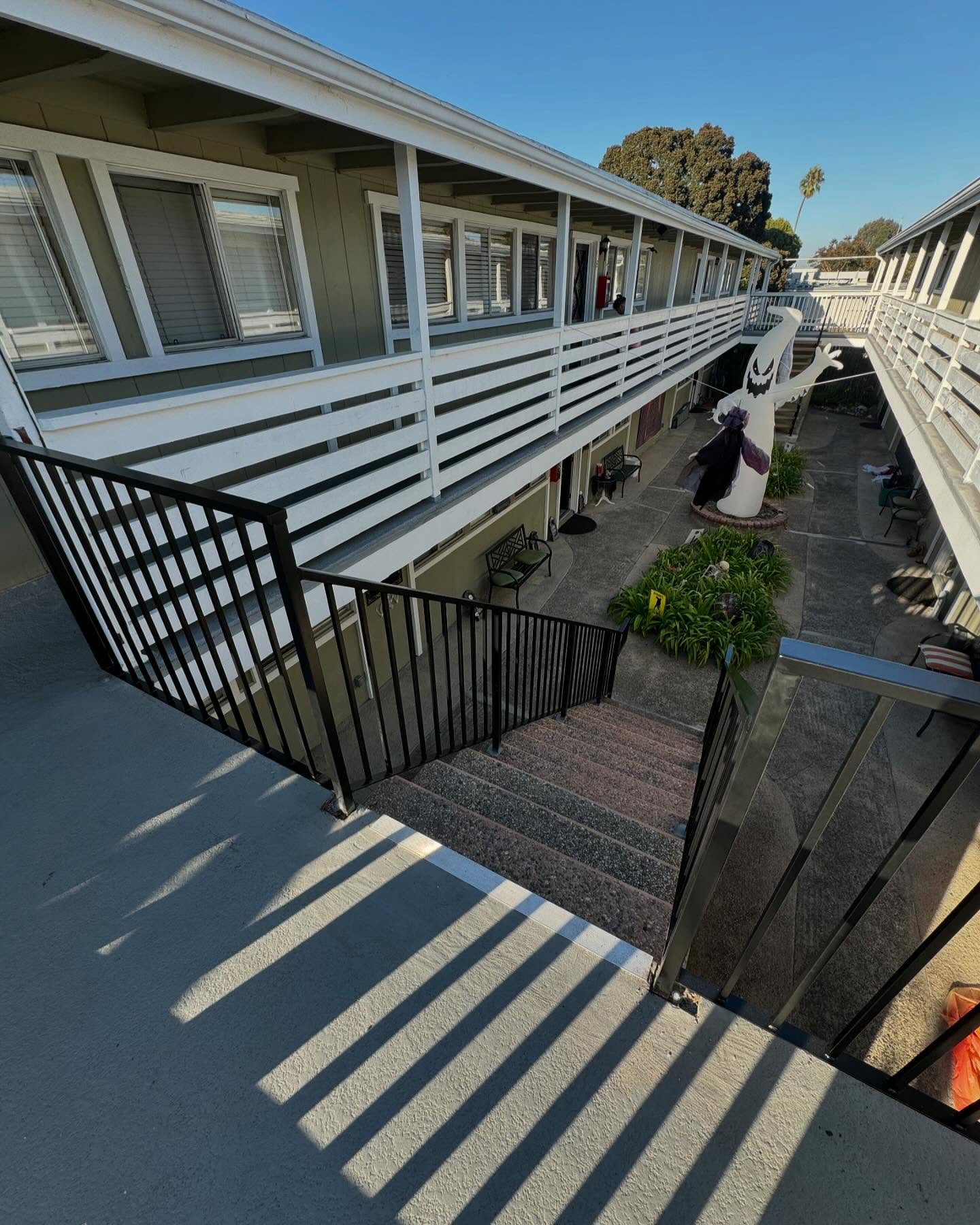
Not every coastal property uses outdoor staircases the same way. Foot traffic, exposure, and design priorities vary widely, which means the best outdoor stair railing ideas depend on how the space is used and who it's for.
Below is a practical breakdown based on real-world coastal applications:
1. Luxury Single-Family Coastal Homes
For high-end homes near the coast, outdoor stair railings serve both a safety function and a design purpose. These railings are often visible from the street or used daily as primary access points.
What works best:
Custom iron or steel railings with architectural proportions
Wood-and-iron combinations that align with exterior finishes
Powder-coated or marine-grade materials specified for salt exposure
Focus here:
Visual cohesion
Long-term durability
Minimal maintenance over time
2. Multi-Level or Split-Entry Homes
Homes with multiple exterior stair runs place heavier demands on railing systems due to frequent use and exposure.
Best-fit railing ideas:
Continuous handrails with consistent height and grip profiles
Simplified designs that reduce joint count and corrosion points
Strong anchoring systems designed for repetitive loading
Stair-related falls remain one of the most common causes of residential injuries. Properly designed and installed handrails significantly reduce risk, especially in wet or salty conditions common near the coast.
Design priority:
Safety first, without visual bulk
Railings that feel solid and intentional, not retrofitted
3. Custom Builds and Major Renovations
Custom homes and extensive renovations offer the most significant design flexibility and the most incredible opportunity to get it right from the start.
Why custom railings matter here:
Railing systems can be designed alongside stair geometry
Materials and finishes can be coordinated with gates, fencing, and balconies
Coastal exposure can be addressed proactively, not corrected later
Railings designed during the planning phase last significantly longer than systems added post-construction, mainly due to better anchoring, drainage, and material integration.
Ideal approach:
Fabrication-led design
Early coordination with builders and architects
Long-term performance prioritized over short-term cost savings
4. Properties with Shared or High-Use Exterior Stairs
For properties where exterior stairs are used frequently, such as duplexes or managed residences, railing performance becomes even more critical.
What matters most:
Durability under repeated contact
Ease of inspection and maintenance
Finishes that resist chipping and surface breakdown
Operational reality:
Maintenance and replacement costs often exceed initial fabrication costs over the life of a railing system if materials are poorly specified.
Choosing durable, coastal-appropriate railings reduces long-term operating expense.
Ultimately, the most successful outdoor staircase railing designs align with the use case, environment, and architecture from the start.
Even well-designed railings can fail when key details are overlooked. Understanding the most common mistakes helps prevent issues that often appear years after installation.
Common Mistakes to Avoid When Choosing Outdoor Staircase Railings
Coastal homes punish "good enough" decisions. The mistakes below are the most common causes of early rust, loose railings, or a complete redo in places like Huntington Beach and Newport Beach.
Assuming "outdoor-rated" means "coastal-rated.”
Near the shoreline, corrosion can be dramatically faster. One North Carolina coastal test found iron samples corroded 10× faster at ~80 ft from the shoreline than at ~800 ft inland. A railing system that performs fine inland can fail early near the ocean.
Choosing a style that traps salt and moisture
Tight scrollwork, stacked plates, flat horizontal ledges, and boxed-in details collect salt residue and stay wet longer. Cleaner profiles (fewer crevices, better drainage) typically hold up better for outdoor stair railings designs in marine exposure.
Overlooking coating system quality and prep
In coastal conditions, the coating system is a "make or break" decision. ASTM B117 salt spray is widely used to compare coating durability; standard benchmarks range from 250–500 hours (basic durability) to 750–1,000+ hours (high-exposure requirements).
Mixing metals without thinking about galvanic corrosion
Using dissimilar metals (or the wrong fasteners) can create corrosion hotspots at connection points. This is one of the most common ways “nice-looking” railings start rusting at the bolts and brackets first.
Treating anchors and mounting as a minor detail
Coastal stairs see moisture + movement. If posts are anchored into weak substrate, undersized blocking, or poorly sealed penetrations, you get wobble, water intrusion, and early failure. High-end railings are only as strong as the mounting and sealing strategy.
Ignoring real-world usability and safety
Many “inspiration" railings look great but don't feel secure in day-to-day use (especially on wet steps). For exterior stairs, hand placement, continuity, and stability matter just as much as appearance, especially for multi-level homes and frequent-use stair runs.
Not planning for maintenance in a salt-air zone
Coastal metalwork often requires periodic rinsing/cleaning and inspection to prevent salt residue from building up and damaging edges, welds, and fasteners. If the design makes cleaning impossible (due to too many tight pockets), it ages faster.
Hiring a fabricator who designs for “anywhere,” not the coast
Coastal performance requires coastal decision-making: material selection, detail design, weld strategy, finish spec, and install methods. This is where local experience becomes a real advantage, not a marketing line.
Now, avoiding these problems starts with a clear, intentional process. Knowing how a coastal-appropriate railing is designed, fabricated, and installed sets the right expectations from the start.
Outdoor Staircase Railing Design Process (What to Expect)
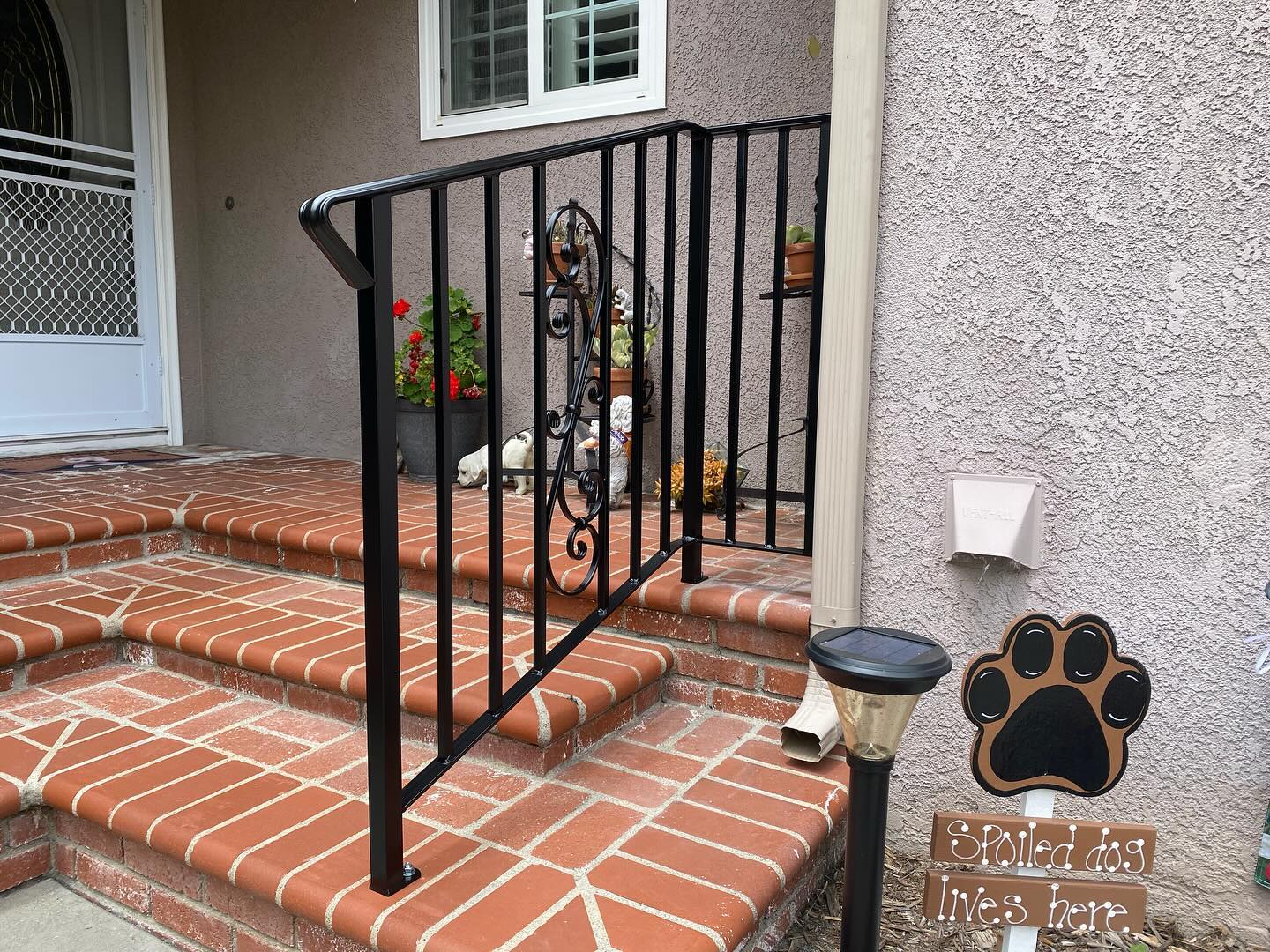
Understanding the design and fabrication process helps set expectations for quality, cost, and long-term performance. For coastal homes, particularly in Huntington Beach, Newport Beach, and Seal Beach, an intentional process reduces the risk of premature corrosion and ensures safety and durability.
Below is a step-by-step breakdown that reflects how high-end railing projects typically unfold.
1. Initial Consultation and Site Assessment
Before design begins, a qualified fabricator must evaluate the site.
What happens here:
Measure stair geometry accurately - coastal stairs often have unique entries, elevation changes, and wind exposure.
Assess local conditions: salt exposure, prevailing winds, sun angles, and drainage.
Inspect substrate (concrete, wood, pavers) to determine anchoring strategy.
2. Material and Finish Selection Based on Exposure
Material decisions are critical near the coast, and this phase heavily influences long-term performance.
Typical decisions include:
Selecting marine-grade metals (e.g., 316 stainless steel) where applicable
Choosing powder-coated steel/iron with a robust coating system for salt spray resistance
Specifying wood species and sealing systems when integrating wood elements
3. Custom Design Development
At this stage, railings are drawn to match both site conditions and design intent.
Key elements reviewed:
Profile shapes and proportions
Handrail height and grasp guidelines (IBC and ADA, where relevant)
Attachment details and anchoring methods
Drainage and moisture shedding considerations
4. Engineering and Code Compliance Review
Safety isn't negotiable. Improperly engineered railings frequently fail at connection points, not in the posts or rails themselves.
What's evaluated:
Load ratings based on use (private residence vs high-use scenarios)
Guard height and spacing compliance (IBC/IRC)
Anchorage strength for wind uplift conditions common in coastal areas
5. Fabrication with Quality Controls
In-shop fabrication is where design becomes reality. Continuous welds on structural joints outperform segmented welding in coastal conditions by limiting exposed edges where corrosion can initiate.
What happens here:
High-precision cutting and welding
Quality assurance checks at every weld
Pre-finish treatments and inspection
Coating application based on the specified system
6. On-Site Installation and Final Inspection
Installation isn't a separate “last step." It's a critical part of performance.
Why:
Coastal conditions demand sealant continuity at penetrations
Anchors must be adequately sealed against moisture ingress
Railings must be perfectly plumb and secure as movement accelerates wear
Installation steps usually include:
Site verification of dimensions
Drilling and anchoring to the substrate
Adjustment and leveling
Sealant application at all penetrations
Final safety inspection
7. Post-Installation Care & Maintenance Overview
Even the best coastal railings benefit from periodic care.
Recommended actions:
Light rinsing with fresh water every 3–6 months in heavy salt air areas
Visual inspection of fasteners and welds annually
Touch-up of coatings if necessary
This process reflects how high-end, coastal-appropriate outdoor stair railings should be designed, engineered, and installed intentionally and with long-term performance in mind.
If you're planning a new outdoor staircase railing and want a clear process, working with a local, certified fabricator like Pacific Wood and Iron helps ensure nothing is left to assumptions. A defined process is often the difference between a railing that performs over the long term and one that needs attention far too soon.
Upgrade Your Coastal Staircase with Expert Custom Railings from Pacific Wood and Iron
Outdoor stair railings in coastal environments demand more than standard fabrication. They require experience with salt-air exposure, precise welding, and materials selected for long-term performance.
Pacific Wood and Iron brings a craftsman-led approach to custom outdoor staircase railings, helping homeowners and builders achieve durable, architecturally refined solutions.
The focus is always on safety, longevity, and a finished result that fits the home.
Why Work with Pacific Wood and Iron
Certified, Experienced Welders
Professional fabrication and welding for iron, steel, wood-and-metal integrated railing systems designed for exterior use near the coast.Custom Outdoor Staircase Railings
Modern architectural railings, wrought iron designs, and wood-and-iron combinations tailored to your staircase, not pulled from a catalog.Coastal-Appropriate Materials & Finishes
Material selection and coating systems are chosen specifically for salt air, moisture, and sun exposure every day in Huntington Beach and nearby coastal cities.Repair, Upgrades, and Rust Remediation
Evaluation and repair of existing outdoor stair railings, including rust management and structural reinforcement when replacement isn't the right first step.On-Site Fabrication & Installation
Mobile welding and precise on-site installation to ensure proper fit, anchoring, and long-term stability.Local Coastal Expertise
Based in Huntington Beach, with hands-on experience serving coastal homes in Newport Beach, Seal Beach, and select surrounding areas.
For homeowners, builders, and property managers planning serious outdoor staircase railing projects, working with a local, certified fabricator ensures the result is built for the environment, not just for appearance.
Conclusion
Outdoor staircase railings are a long-term exterior investment, especially for coastal homes where salt air, moisture, and sun exposure accelerate wear. The right choice isn't about following trends or selecting what looks good in a photo.
It's about choosing a railing system that fits the architecture, performs in a coastal environment, and holds up safely year after year. For projects in Huntington Beach, Newport Beach, Seal Beach, and nearby coastal areas, working with a fabricator who understands these conditions makes a measurable difference.
Pacific Wood and Iron approaches outdoor stair railings as purpose-built exterior systems rather than off-the-shelf components, ensuring each project is designed for its environment and use.
Choosing the right partner early helps ensure your outdoor staircase railing is built once and built to last.
FAQs
1. How often do outdoor stair railings near the coast need maintenance?
In coastal environments, most metal stair railings benefit from light rinsing every 3–6 months to remove salt buildup. Annual inspections help catch coating wear or fastener issues early before corrosion spreads.
2. Are glass or cable railings a good idea for outdoor coastal staircases?
They can work, but only when specified correctly. Coastal exposure increases maintenance needs for glass and cable systems, and improper hardware selection can lead to corrosion or loosening over time.
3. Can existing outdoor stair railings be upgraded instead of replaced?
In many cases, yes. If the structure is sound, targeted rust remediation, reinforcement, or finish upgrades can extend the life of an existing railing without complete replacement.
4. Do outdoor stair railings need to meet different codes than interior railings?
Yes. Exterior stair railings must account for environmental exposure and typically require stricter anchoring, load resistance, and corrosion considerations in addition to standard safety code requirements.
5. How long does a custom outdoor staircase railing project usually take?
Timelines vary by design complexity and finish requirements, but most custom outdoor stair railing projects include design, fabrication, and installation phases that span several weeks rather than days.