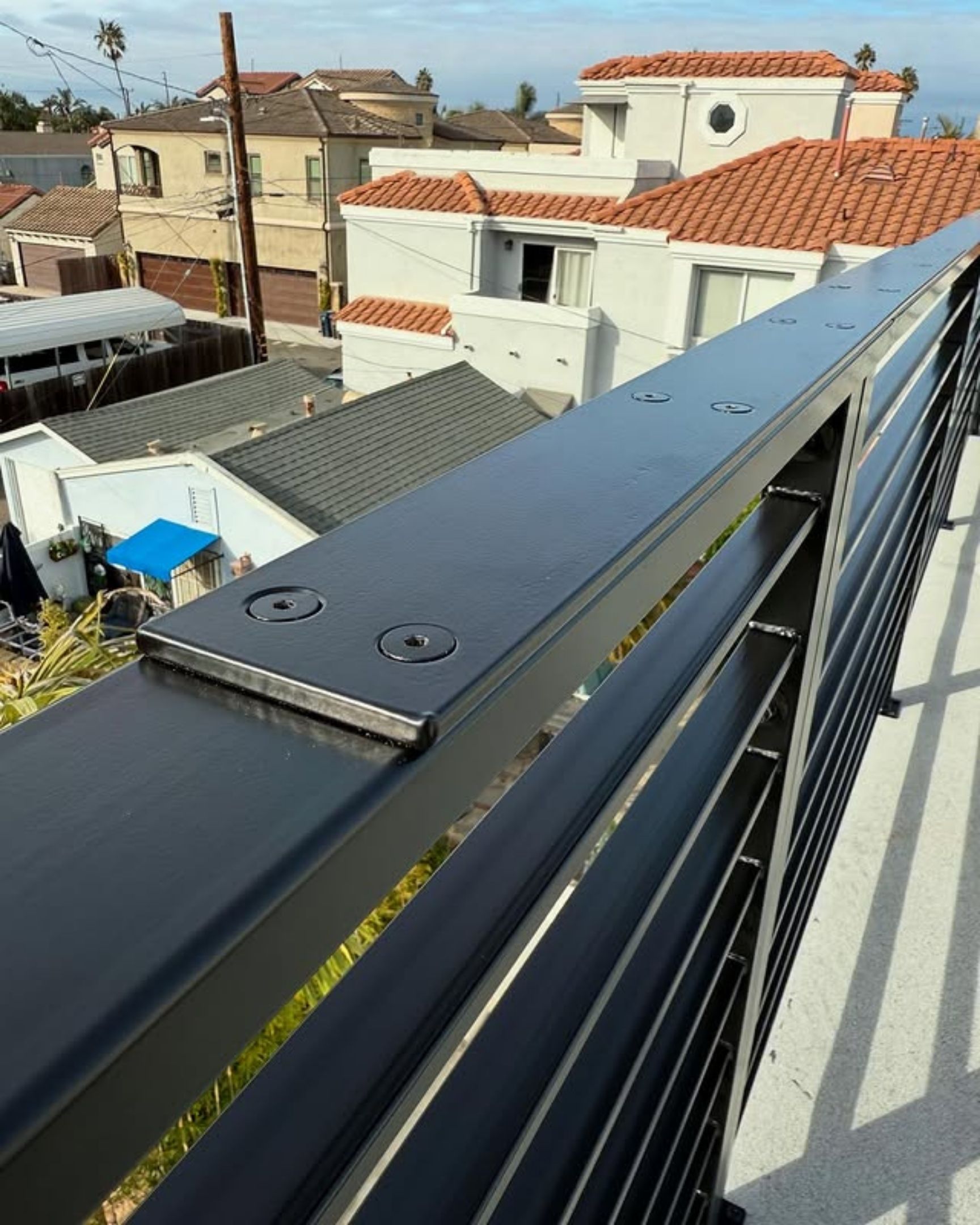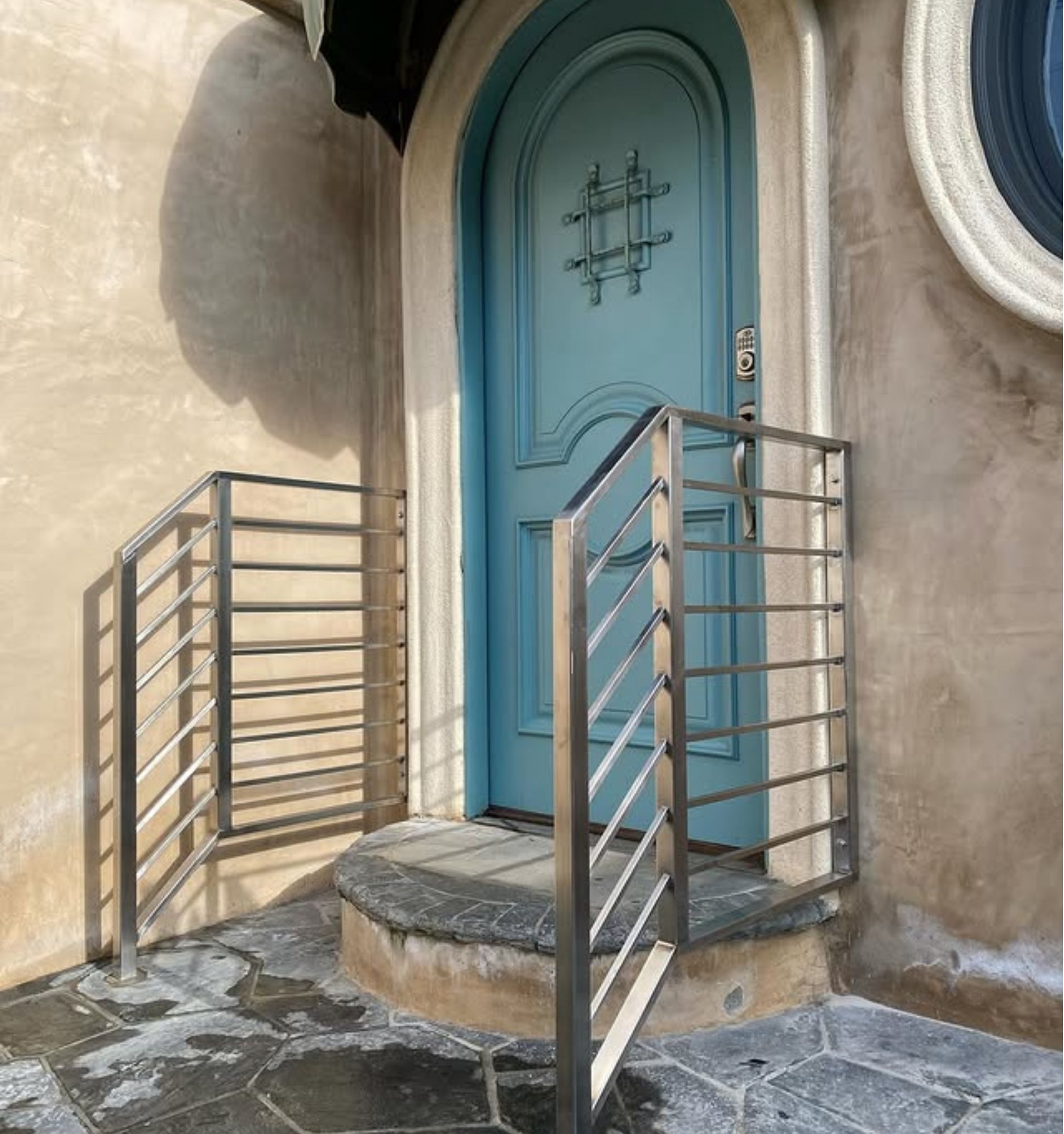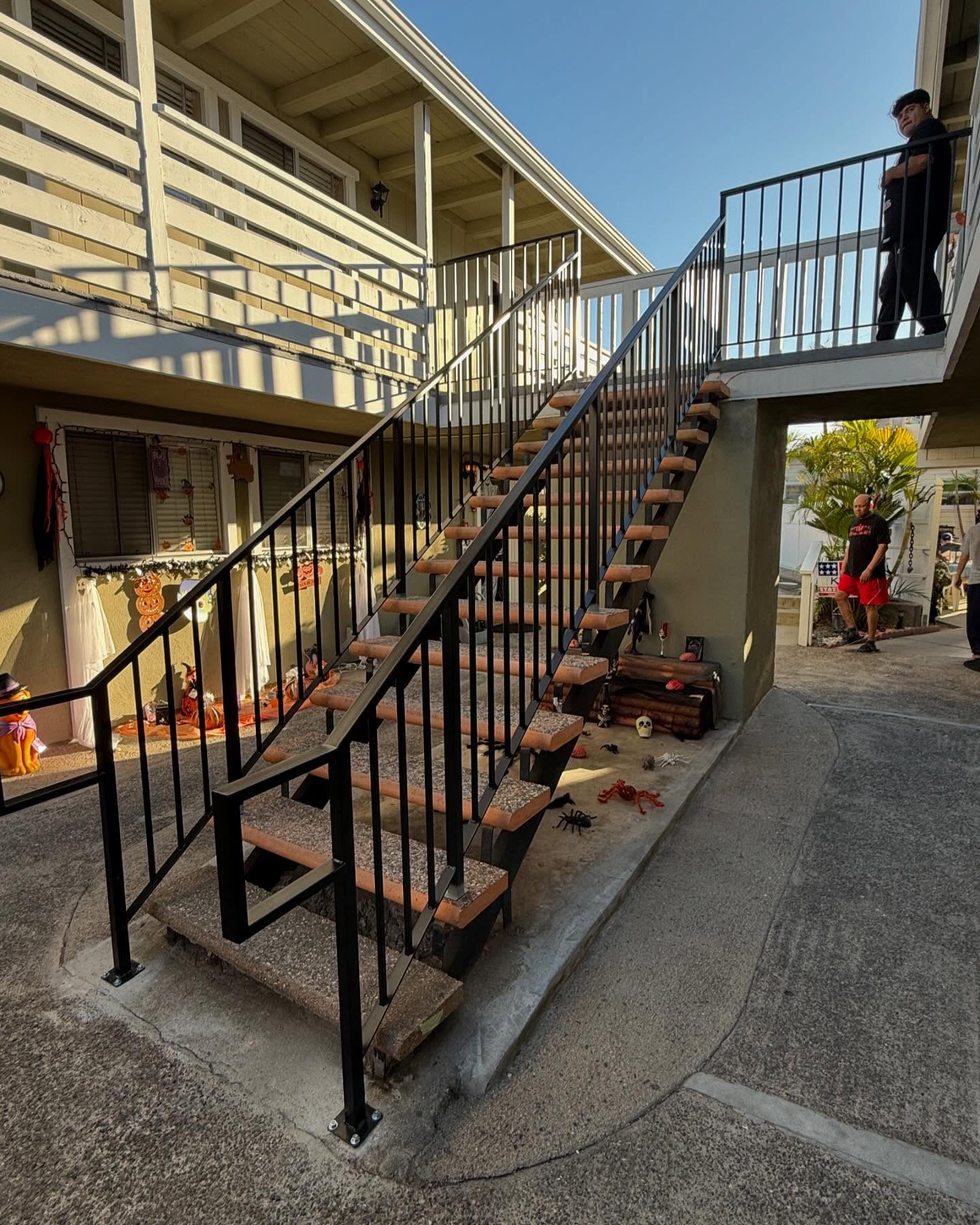
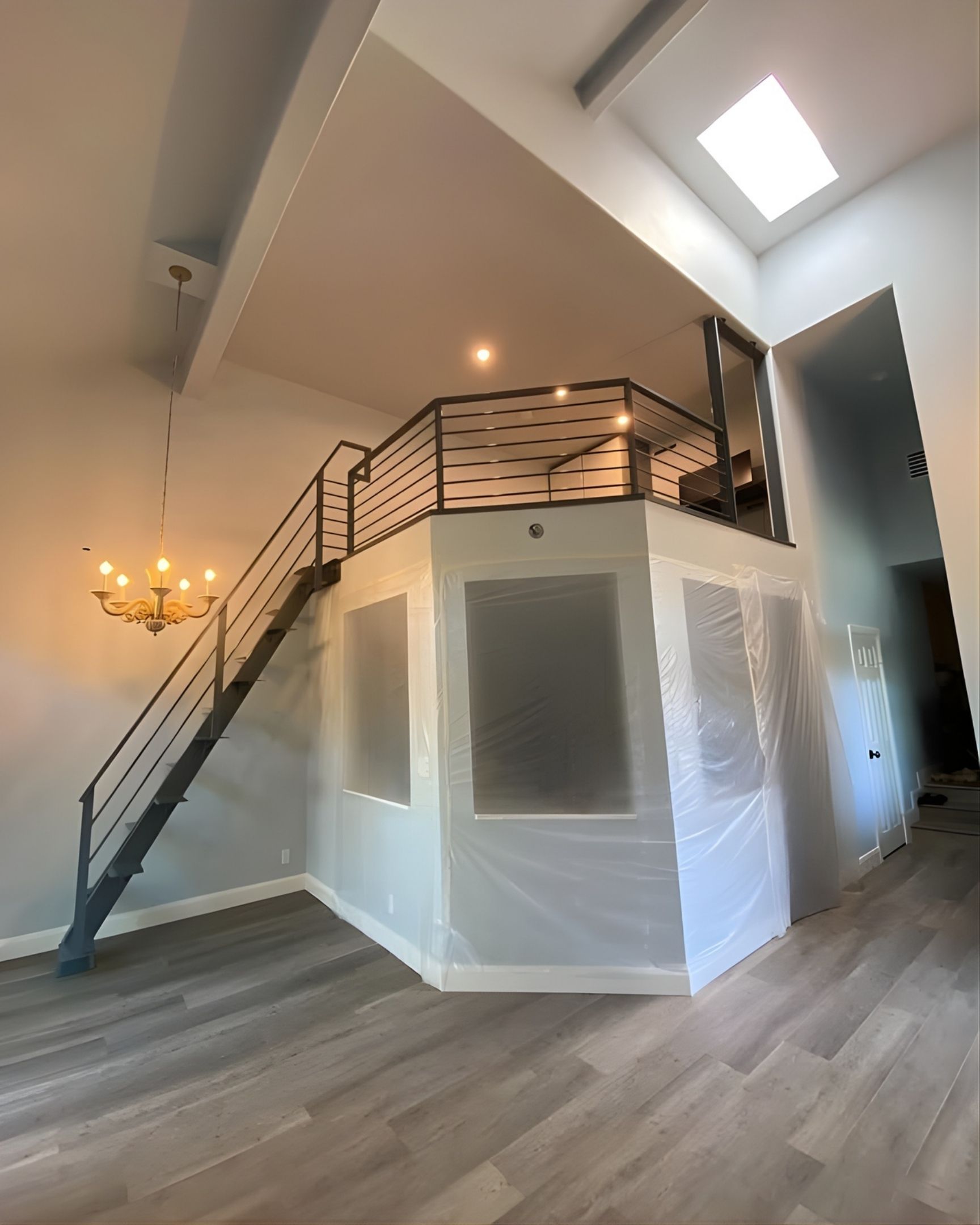
A porch railing isn't décor. It's a code-driven safety system that also shapes curb appeal, especially on coastal homes where the front entry is always on display. The residential building code (IRC) requires guards in many porch conditions and sets a minimum guard height of 36 inches for open-sided walking surfaces, such as porches and landings.
Curb appeal is the other reason railings matter. A dated, rusting, or mismatched porch railing can quietly undermine how the entire home is perceived.
Coastal exposure raises the stakes. AMPP-published corrosion research shows that chloride deposition is highest within about 1 km of the sea and decreases with distance. This is precisely why railings near the coast can deteriorate faster if finishes and detailing aren't specified correctly.
This blog explores the best metal porch railing ideas that combine clean design, code-aware safety, and coastal durability. These kinds of choices make sense for homeowners and builders in Huntington Beach and nearby coastal communities.
Quick Glance
Metal porch railings are structural safety features, not décor. Code compliance, load strength, and secure anchoring matter as much as design.
Coastal conditions demand better materials and finishes. Salt air accelerates corrosion at welds and connections, making the quality of fabrication critical.
Only specific railing designs truly add value. Railings that balance safety, durability, and architectural fit outperform generic systems.
Custom fabrication prevents early failure and rework. Railings built for the actual porch layout last longer and stay aligned over time.
Pacific Wood and Iron builds porch railings for coastal homes. Huntington Beach–based, certified fabrication focused on durability, precision, and long-term value.
What to Consider Before Choosing a Metal Porch Railing
Before you choose a style, make sure the railing is designed to meet code requirements, withstand exposure, and withstand real daily use. That's what determines whether it adds value or becomes a redo.
Safety and Code Requirements
Porch railings are governed by code, not preference. The IRC requires guards where the drop is more than 30 inches, and specifies a minimum 36-inch guard height for porches, balconies, and landings.
It also limits openings so a 4-inch sphere can't pass through (a common failure point with "modern" spacing done incorrectly).
Coastal Exposure and Corrosion Risk
Coastal railings don't fail evenly. Corrosion concentrates at welds, cut ends, and connection points, mainly where salt deposits collect.
AMPP-published research shows chloride deposition is highest within about 1 km of the sea and decreases with distance, which is why coastal homes need better detailing and finish systems than inland installs.
Finish System & Long-Term Appearance
In practice, the right finish isn't just "paint vs. powder coat." Coastal railings need a system that protects bare steel at edges and weld zones, not just visible faces. If those areas aren't properly sealed and coated, that's where rust typically starts first, even when the rest of the railing looks fine.
Custom Fit vs. Off-the-Shelf
Pre-fab railings are built to generic runs and mounting conditions. Custom fabrication allows the railing geometry to match the porch's actual layout (stair transitions, columns, landing angles). This improves both the clean appearance and long-term stability, especially on older porches where surfaces aren't perfectly square.
With these factors clear, choosing the right look becomes much easier.
Not sure which metal porch railing design fits your porch height, exposure, and daily use? Pacific Wood and Iron helps property owners and builders evaluate real site conditions early, so railing decisions are based on safety, code, and long-term performance, not guesswork.
Next are metal porch railing ideas that are popular on coastal homes because they add value without sacrificing durability or compliance.
8 Best Metal Porch Railing Ideas to Consider
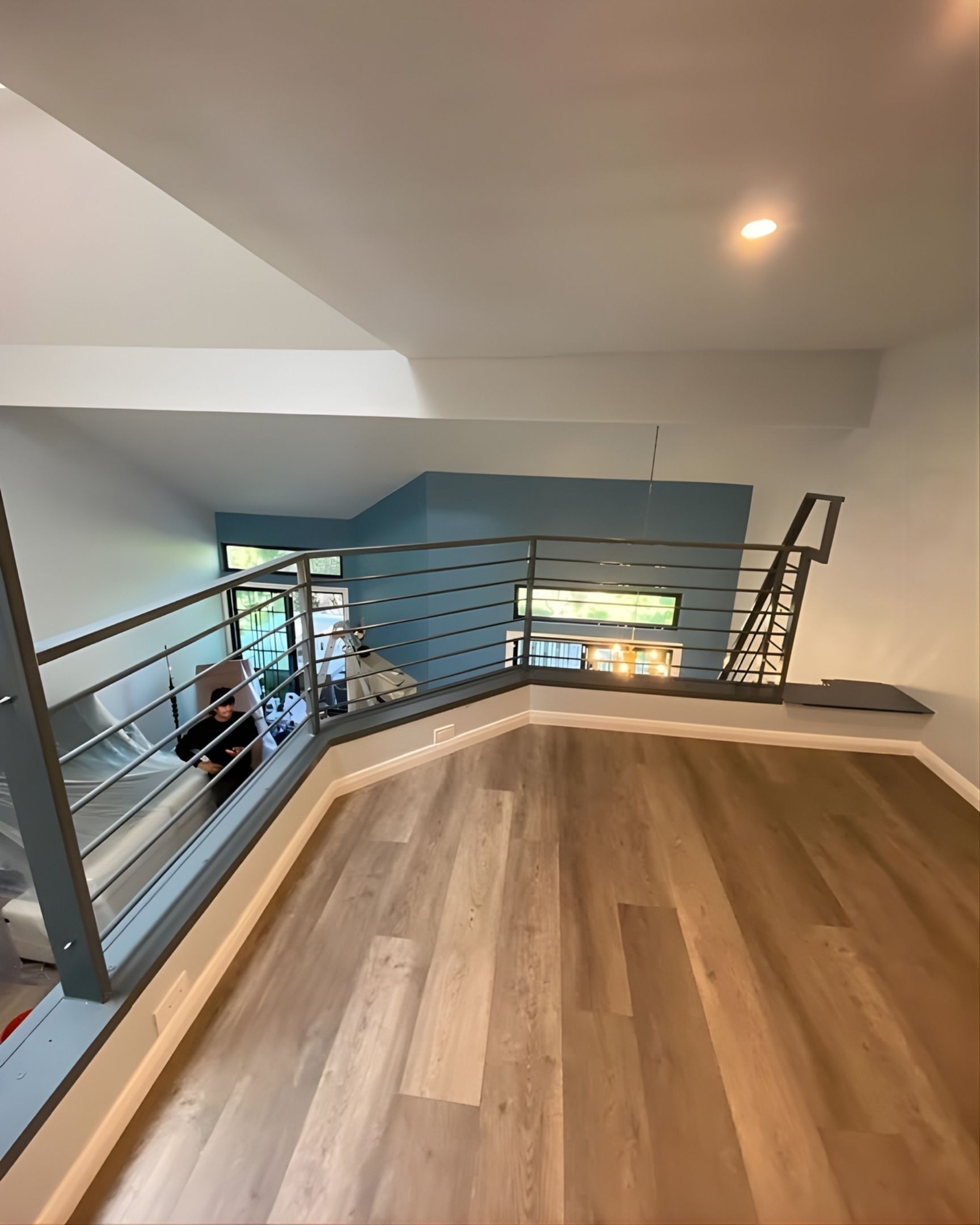
Not all metal porch railings add value. Some meet the minimum code. Others actively improve safety, durability, and the home's perceived value, which matter most in coastal markets.
The following metal porch railing ideas are commonly specified on higher-end homes because they perform well structurally, age predictably in coastal conditions, and align with modern residential architecture.
1) Vertical Metal Bar Railings
Best for: Front porches, elevated entries, traditional-to-modern homes
Vertical bar railings remain one of the most value-stable designs because they naturally comply with IRC spacing and load requirements when fabricated correctly.
From a safety standpoint, vertical orientation reduces climbability compared to horizontal rails, which is why it's often favored for elevated porches.
From a durability perspective, vertical designs shed water more effectively than flat or boxed sections, reducing moisture retention at joints.
2) Horizontal Metal Porch Railings
Best for: Modern coastal homes with wide façades
Horizontal railings are popular for their clean, architectural look, but they add value only when properly engineered.
Because horizontal members experience greater lateral load, post spacing and attachment points must be calculated, not guessed.
When done correctly, horizontal railings visually widen the porch and reinforce modern design language. When done poorly, they become a code or safety liability.
That distinction is what separates high-end fabrication from generic installs.
3) Metal-and-Wood Hybrid Railings
Best for: Custom homes balancing warmth and structure
Using metal as the structural frame with wood as a non-structural accent reduces the maintenance burden associated with full wood railings.
In coastal climates, this matters. Wood exposed directly to salt air requires frequent sealing, while steel provides long-term stability.
Hybrid railings are often chosen for custom homes because they allow visual warmth without sacrificing service life, making them a value-driven design choice rather than a stylistic one.
4) Minimalist Metal Railings With Open Sightlines
Best for: Porches where visibility and light matter
Slim-profile metal railings with open spacing are effective where property owners want protection without visual obstruction.
These designs work particularly well on elevated porches where maintaining sightlines improves the experience of the space.
Because minimalist railings expose inconsistencies immediately, they demand tight fabrication tolerances. Clean welds and consistent spacing are not optional here; they're the entire design.
5) Powder-Coated Black Metal Railings
Best for: High-contrast, modern exteriors
Black remains one of the most specified railing finishes because it complements light façades and hides minor surface wear better than lighter colors.
From a performance standpoint, high-quality powder coating offers UV resistance, helping prevent chalking and fading, a common issue in sun-exposed coastal settings.
When paired with proper surface preparation, black powder-coated railings maintain their appearance far longer than painted systems.
6) Cable-Style Metal Porch Railings (Where Code Allows)
Best for: View-focused porches
Cable railings maximize visibility, but they're also one of the most technically demanding systems. Tension, deflection, and spacing must all meet code, and hardware quality matters significantly more than aesthetics.
Because of these constraints, cable railings tend to add value only when professionally engineered and fabricated, which is why they're most often seen on custom homes rather than production builds.
7) Subtle Decorative Metal Railings
Best for: Transitional architecture
Light patterning or restrained detailing can add character without dating the home. The key is restraint.
Overly ornate designs often reduce resale appeal, while subtle detailing enhances identity without overpowering the porch.
These railings are typically custom-fabricated to ensure decorative elements don't interfere with spacing or structural performance.
8) Fully Custom Metal Porch Railings
Best for: Homes where long-term value matters most
Custom railings are designed around the actual porch dimensions, stair geometry, and exposure conditions, not a template. This allows for cleaner transitions, better anchoring, and finishes that protect vulnerable areas like welds and cut edges.
From a value perspective, custom exterior metalwork consistently signals quality and permanence, especially in coastal markets where buyers are sensitive to maintenance and longevity.
Each of these metal porch railing ideas earns its place by exceeding minimum requirements. But not every design works equally well in every setting.
Let's look at where these metal porch railing ideas make the most sense.
Where These Metal Porch Railing Ideas Work Best
These metal porch railing ideas add the most value in places where code exposure, visibility, and coastal conditions intersect.
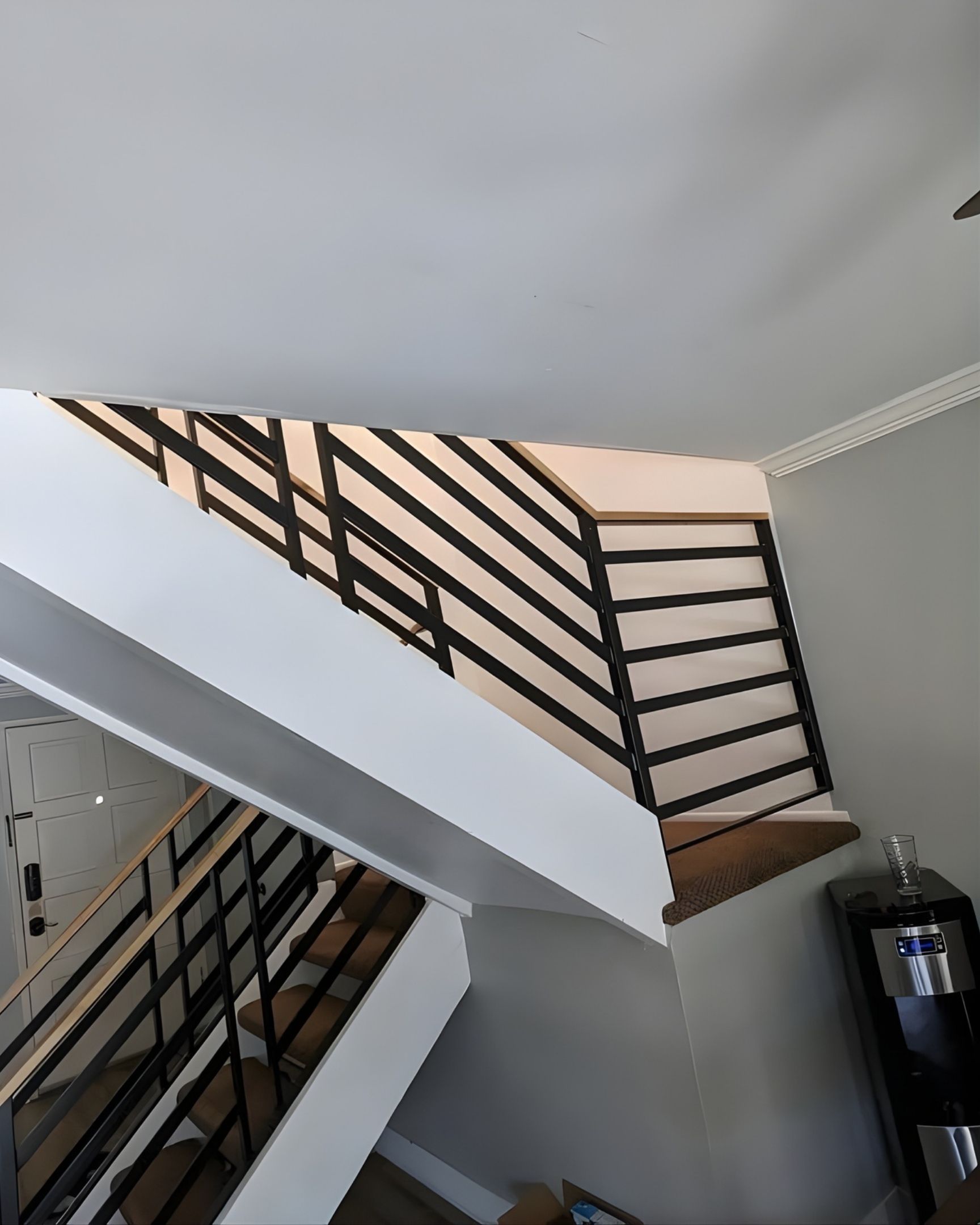
For instance, if your home is close to the water, durability becomes a design requirement. Atmospheric corrosion and chloride deposition are highest closest to the sea. That's why porch railings near the coast need better detailing at welds, edges, and connections.
Elevated porches and entry landings
Where the drop-off is meaningful, railings stop being "nice to have" and become a compliance issue. At open-sided walking surfaces, a well-built metal railing adds value by reducing risk and avoiding future rework during inspections.
High-visibility, design-forward homes
On custom and renovated homes, the porch railing sits in the primary approach view. That's why minimalist and modern metal railings tend to perform best here: they're visually clean, don't overwhelm the façade, and hold their lines over time when fabricated correctly.
Primary coastal markets
These applications are most common in Huntington Beach, Newport Beach, and Seal Beach, where coastal exposure is real, and not every "standard railing system" holds up the same way over the long run.
Does your porch railing need to meet code? You must withstand coastal exposure and stay straight over time. To help with that, Pacific Wood and Iron is here, which focuses on certified welding, proper anchoring, and finishes that protect the most failure-prone areas.
Choosing the Right Metal Porch Railing for Your Home
Choosing the right metal porch railing is less about style preference and more about aligning use, exposure, and long-term ownership goals. The wrong decision usually shows up years later as corrosion, movement, or costly retrofits.
1. Match the Railing to Porch Height
Porch height directly affects structural requirements. Railings on elevated porches or stair landings experience higher lateral and point loads, which is why post spacing, anchoring depth, and weld quality matter more here than on ground-level installations.
2. Factor in Coastal Exposure Early
Coastal metal components deteriorate fastest at edges, welds, and fastener connections, not on flat surfaces. Choosing a design that reduces moisture trapping and wind stress can significantly extend service life.
3. Think About Frequency of Use
Porches with frequent foot traffic place repeated stress on railing connections. If the porch includes stair railings or transitions into gates, those junctions need reinforcement. Connection points are the first areas to loosen or deflect over time when they're underdesigned.
4. Consider Long-Term Ownership Costs
While metal porch railings typically cost more upfront than wood, materials with longer service lives and lower maintenance requirements often result in lower total cost, especially in harsh environments. For homeowners planning to stay put or builders delivering long-term value, this matters more than initial price.
When these factors are addressed up front during selection, the railing becomes a permanent architectural feature rather than a recurring maintenance issue.
Upgrade with Custom Metal Porch Railings by Pacific Wood and Iron
Metal porch railings are both structural safety features and design elements. Pacific Wood and Iron combines certified welding, custom fabrication, and coastal-aware detailing to build metal porch railings that are clean, code-compliant, and built to last.
Whether you're adding new porch railings, replacing outdated systems, or integrating railings with entry stairs and landings, each project is approached with durability, fit, and long-term performance in mind.
Why Work With Pacific Wood and Iron?
AWS-Certified Welders
Professional welding and fabrication for metal, wood, and mixed-material railing systems.Custom Fabrication Services
Metal porch railings, stair railings, gates, and architectural ironwork built to suit the home, not a template.Repair & Restoration
Rust remediation, structural repairs, and upgrades to extend the life of existing railings.Mobile Welding & On-Site Services
Flexible on-site welding and fabrication when porch conditions require custom fitting or modification.Local Huntington Beach Expertise
Based in Huntington Beach and focused on nearby coastal communities where exposure and quality standards are higher.
If you're planning metal porch railings and want them fabricated correctly from the start, Pacific Wood and Iron is a reliable local resource for coastal homes.
Conclusion
Choosing the right metal porch railing comes down to what you value most: safety, durability, and how the railing fits the character of your home. Some designs prioritize openness and modern appeal, while others focus on structure and long-term performance.
The best option is the one that meets code, addresses coastal exposure, and feels intentionally designed for the porch it protects.
If you're ready to upgrade your porch with metal railings that are built to perform and look right for years to come, Pacific Wood and Iron provides custom fabrication, certified welding, and local expertise you can trust. Reach out to start planning a porch railing solution designed for your home and its environment.
FAQs
1. Are metal porch railings slippery or unsafe in wet coastal conditions?
Metal porch railings themselves are not walking surfaces, but grip comfort matters. Properly designed railings use profiles that maintain a secure handhold even in damp conditions, and textured or coated finishes help prevent slick surfaces near the entry.
2. Do metal porch railings rust faster near the coast?
They can if they're poorly fabricated or finished. When properly galvanized and powder-coated, metal porch railings are engineered to resist salt-air corrosion and typically outperform wood or untreated metal in coastal environments.
3. Can metal porch railings be installed on existing concrete steps or porches?
Yes, but anchoring is critical. Existing concrete must be evaluated for thickness, condition, and reinforcement to ensure the railing can meet code load requirements without cracking or loosening over time.
4. Are metal porch railings allowed by the HOA or coastal design guidelines?
In many cases, yes. Modern metal railings are commonly approved when the design aligns with the home's architecture and local guidelines. Custom fabrication allows railings to meet aesthetic requirements while remaining code-compliant.
5. How long does it typically take to fabricate custom metal porch railings?
Timelines vary based on design complexity and site conditions, but custom metal porch railings usually require a few weeks from final design approval to installation. Proper fabrication time is essential for quality and durability.