You’re standing on your balcony, leaning on the railing, and a quiet thought crosses your mind: is this actually safe? Balconies aren’t like patios or decks. They’re elevated, fully exposed, and governed by strict building codes for a reason.
A mistake here isn’t cosmetic; it’s dangerous and expensive to fix later. In fact, the CDC lists falls as one of the leading causes of serious injury in residential settings, which is why balcony guards are tightly regulated in height and spacing.
This is where a steel railing design for a balcony separates serious builds from Pinterest-inspired shortcuts. Steel isn’t chosen just because it looks modern. It’s chosen for strength, rigidity, and long-term performance in exposed conditions.
In this guide, you’ll see steel railing designs that aren’t just visually clean; they’re built to meet code, handle exposure, and last.
At a Glance:
Balcony railings are safety systems, not decorative features: A steel railing design for a balcony must meet code and handle exposure before aesthetics come into play.
Not all “modern” designs work in elevated spaces: Wind load, deflection, and sightlines eliminate many popular but impractical options.
Material and fabrication quality matter more than style: Proper steel selection and coatings determine long-term performance.
Early design review prevents costly changes later: Involving a fabricator early helps confirm feasibility and compliance.
The right approach leads to confidence, not guesswork: Clear decisions upfront result in railings that perform as intended over time.
What Matters Most in a Steel Railing Design for a Balcony
You’re reviewing railing options, and everything looks fine on screen, until you picture real life. Wind pushing through an upper floor. Kids leaning on the rail. Salt air settling in year after year. This is where many balcony projects go wrong.
The railing looks modern, but it wasn’t designed for elevation, exposure, or how people actually use the space. Fixing those mistakes later usually means tearing everything out.
Before looking at styles, here’s what homeowners consistently need to get right.
Fall protection and code compliance: Balcony railings aren’t flexible design elements. Height, opening size, and structural resistance are regulated because failure has serious consequences.
Designs must meet code before aesthetics come into play.
Exposure to wind, sun, and moisture: Balconies take constant abuse. Finishes and fabrication details determine whether a railing ages cleanly or deteriorates prematurely.
Sightlines from inside the home: A good design protects the edge without blocking views or daylight, especially from interior living spaces.
Maintenance access over time: Railings that are hard to clean or refinish become liabilities, not features.
If you’re planning a balcony project, reviewing code requirements and exposure conditions early with an experienced fabricator like Pacific Wood & Iron, can help prevent costly revisions later.
This is where small design decisions start to matter, because on a balcony, the wrong choice shows up fast, and fixing it isn’t simple.
9 Steel Railing Designs That Work for Modern Balconiespa
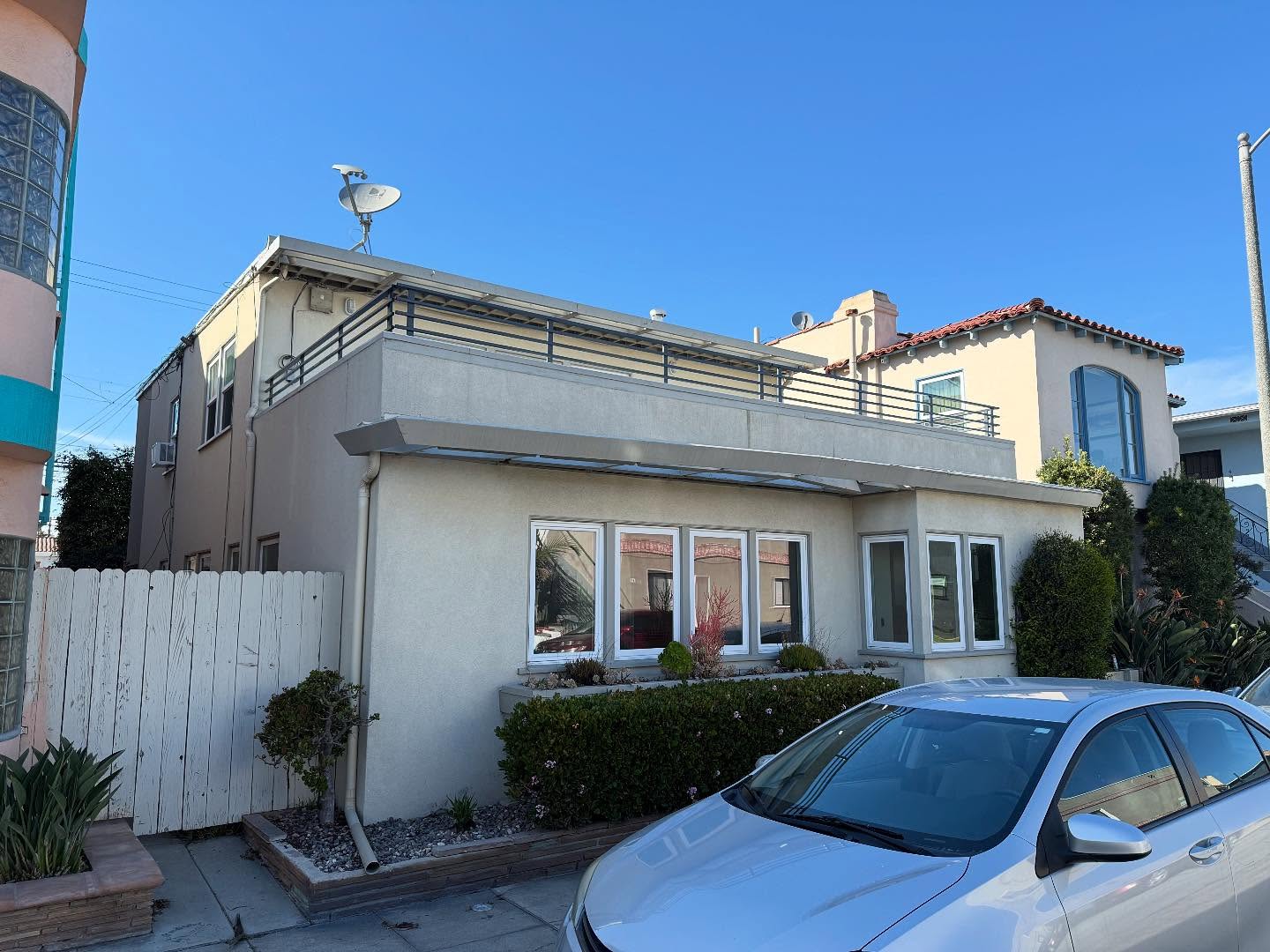
Not every railing that looks good in a photo belongs on a balcony. Elevated spaces demand designs that can handle exposure, meet code, and still feel visually light from inside the home.
The options below aren’t trends or decorative concepts; they’re steel railing designs that have proven to work on real balconies.
1. Horizontal Steel Bar Railings
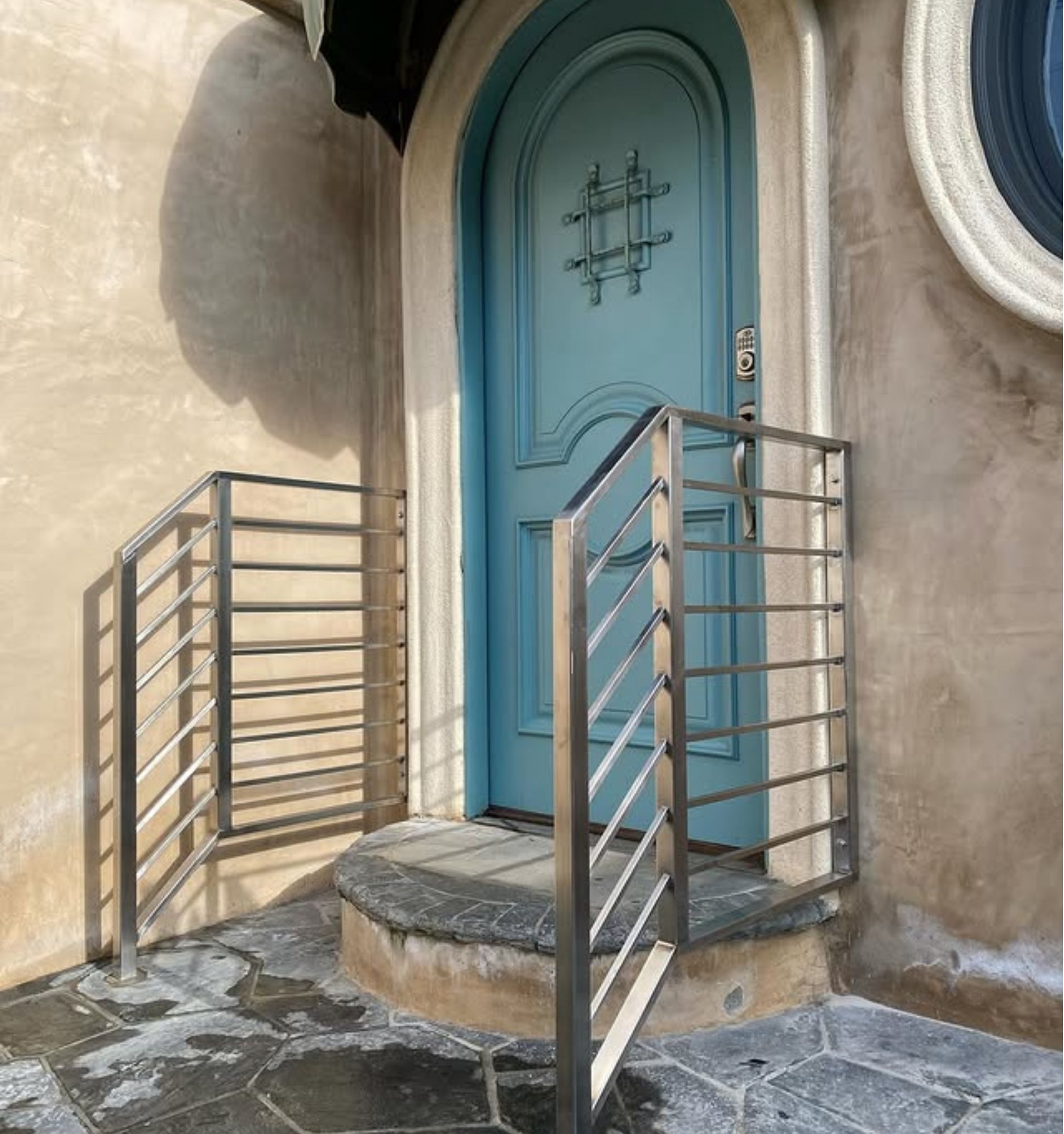
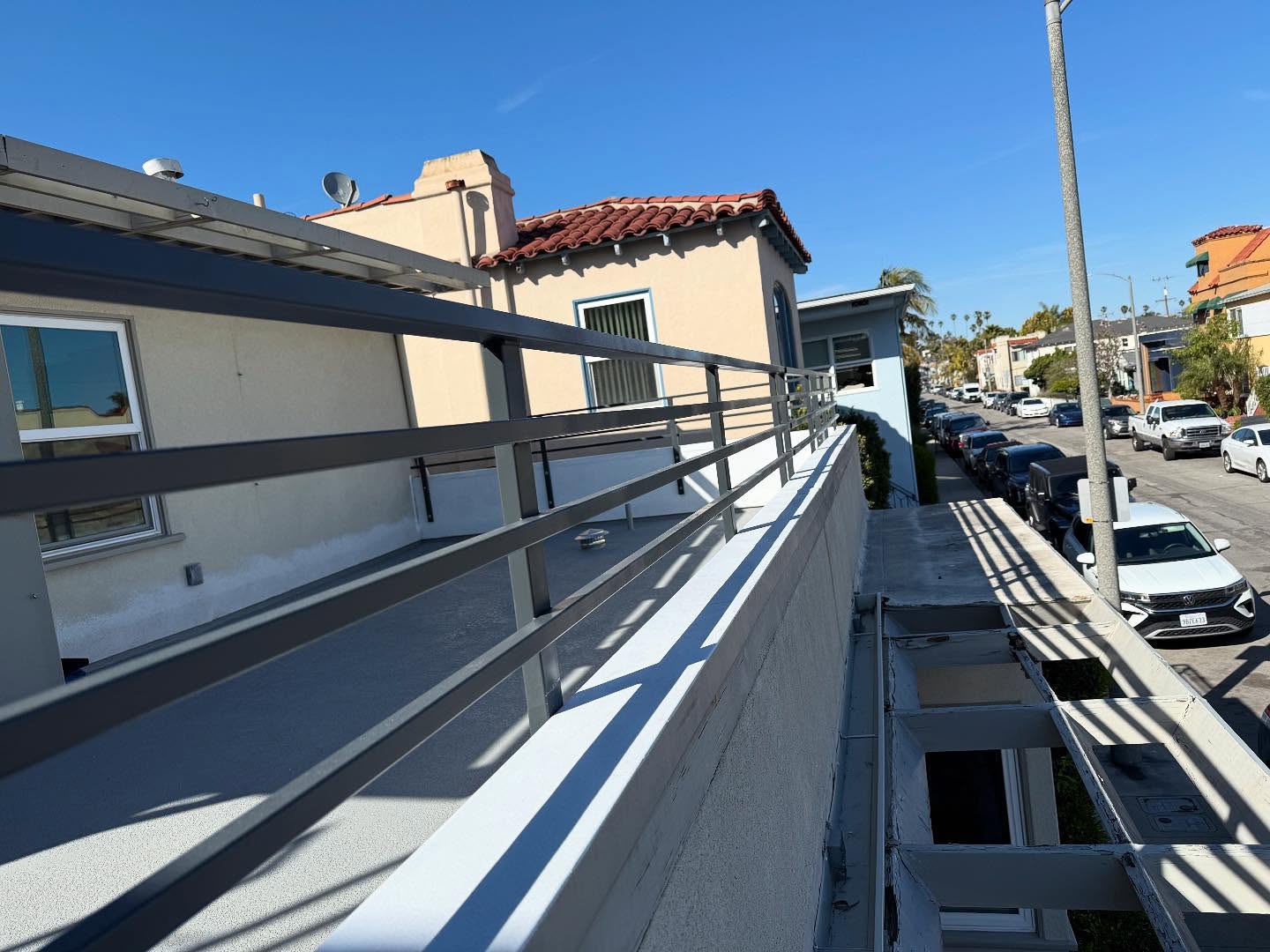
Horizontal steel bar railings use evenly spaced steel bars running parallel to the balcony edge, creating a strong visual line without adding unnecessary bulk. The design emphasizes alignment and proportion rather than decorative detail.
Why Homeowners Choose It
This style keeps views open while still meeting safety requirements, making balconies feel wider and less enclosed without compromising structure.
Best for:
Balconies overlooking views or open spaces
Modern and contemporary home exteriors
Upper levels where visual openness matters
Homeowners who want a clean, minimal look
Design & Fabrication Considerations
Bar spacing must meet code to prevent climb-through risks
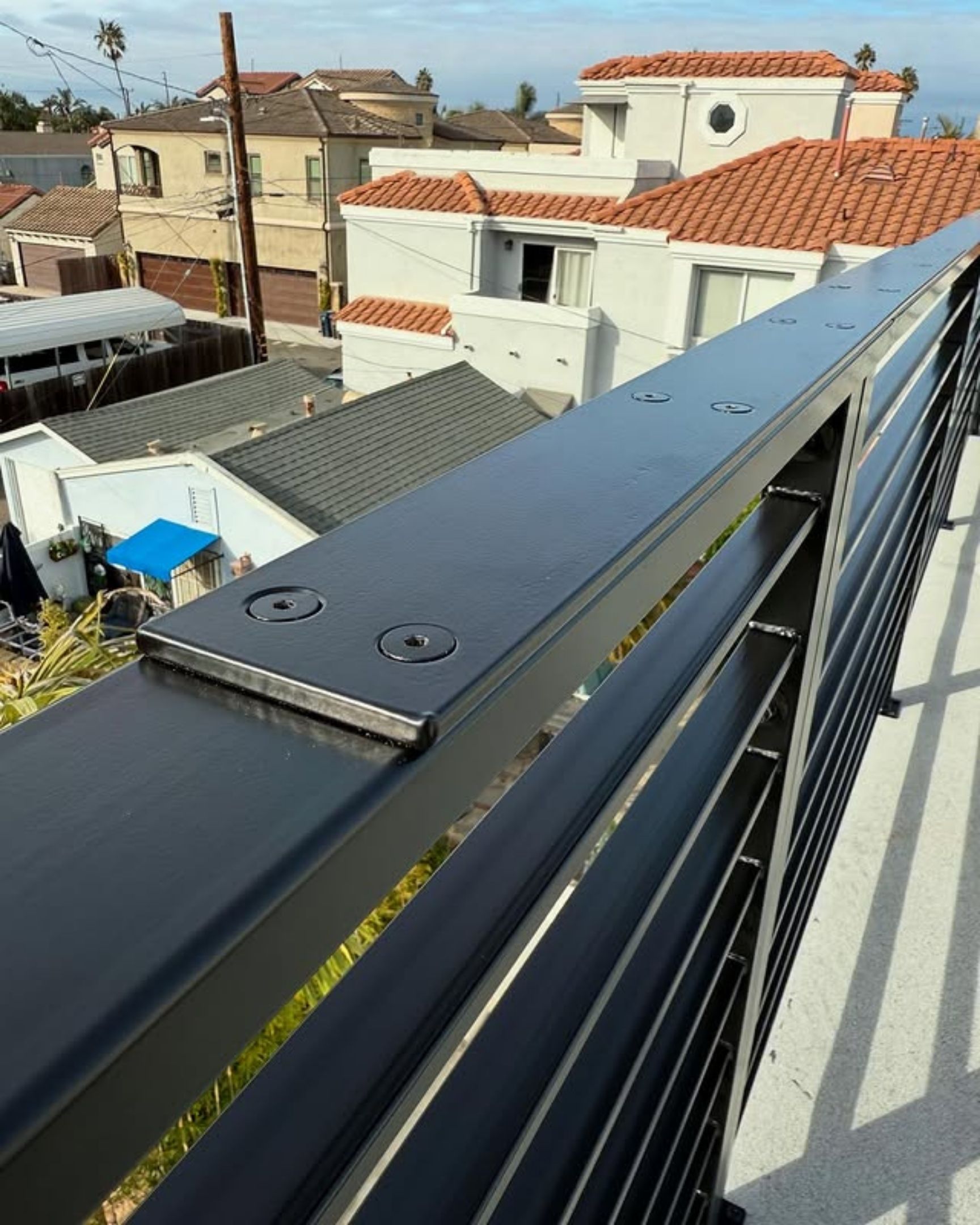
Steel thickness affects rigidity and long-term deflection
Weld quality and alignment are critical for consistent spacing
Protective coatings are essential for exposed, outdoor conditions
2. Vertical Steel Slat Railings
Vertical steel slat railings use upright steel members spaced at regular intervals to form a clean, structured barrier along the balcony edge. The design prioritizes vertical rhythm and visual order over ornamentation.
Why Homeowners Choose It
This layout naturally aligns with code requirements and provides a strong sense of safety without feeling visually heavy from inside the home.
Best for:
Balconies where child safety is a concern
Homes with modern or transitional architecture
Narrow balconies that benefit from vertical emphasis
Projects where code compliance needs to be straightforward
Design & Fabrication Considerations
Slat spacing must meet guard opening regulations
Vertical alignment requires precise fabrication to avoid visual drift
Steel gauge influences rigidity and resistance to movement
Finish selection affects corrosion resistance and long-term appearance
3. Steel Railings with Glass Infill
Steel railings with glass infill combine a steel frame with tempered or laminated glass panels to create a protective barrier without interrupting views. The steel provides structure, while the glass maintains visual openness.
Why Homeowners Choose It
This option preserves sightlines and daylight while still meeting balcony safety requirements, making it popular where views are a priority.
Best for:
Balconies overlooking landscapes, water, or city views
Homes with modern or minimalist architecture
Upper floors where visual openness matters most
Interior spaces that rely on natural light from the balcony
Design & Fabrication Considerations
Glass type and thickness must meet safety and impact standards
Steel framing must account for wind load and panel movement
Drainage and weep details prevent moisture buildup around glass
Precision fabrication is critical to avoid rattling or uneven gaps
4. Laser-Cut Steel Panel Railings
Laser-cut steel panel railings use solid steel sheets cut with precise patterns to form a continuous balcony guard. The design relies on controlled perforation rather than open bars to manage visibility and light.
Why Homeowners Choose It
This option adds privacy and visual interest without adding bulk, making it a strong choice when you want screening without a fully solid wall.
Best for:
Balconies facing close neighbors or shared spaces
Homes with strong architectural or geometric design language
Upper levels where added visual separation is needed
Projects where the railing doubles as a design feature
Design & Fabrication Considerations
Pattern density affects both privacy and wind resistance
Panel thickness determines rigidity and vibration control
Cut edges must be properly finished to prevent corrosion
Custom fabrication ensures panels align cleanly with balcony dimensions
5. Minimal Steel Frame Railings
Minimal steel frame railings use slender steel posts and a reduced top rail to define the balcony edge with as little visual weight as possible. The focus is on structure and proportion rather than infill or pattern.
Why Homeowners Choose It
This design keeps the balcony visually open while still providing a clear safety boundary, making it feel less like a barrier and more like an extension of the architecture.
Best for:
Balconies connected to primary living spaces
Homes with minimalist or modern architectural styles
Locations where preserving light and views is critical
Projects aiming for a refined, understated look
Design & Fabrication Considerations
Steel sizing must balance slim profiles with structural strength
Connection points need precise detailing to prevent movement
Finish quality is highly visible due to the minimal design
Custom fabrication ensures clean joints and consistent lines
6. Steel Cable Railing Systems
Steel cable railing systems use tensioned steel cables within a steel frame to create a lightweight barrier with minimal visual obstruction. The design prioritizes openness and transparency over solid coverage.
Why Homeowners Choose It
Cable railings maintain clear views and a modern feel, but they’re chosen carefully by homeowners who understand the tradeoffs involved.
Best for:
Balconies where preserving views is the top priority
Adult-only households with limited child safety concerns
Modern homes with simple, linear architecture
Locations where local codes explicitly allow cable systems
Design & Fabrication Considerations
Cable spacing and tension must meet guard opening requirements
Some jurisdictions restrict cable railings due to climbability concerns
Regular retensioning may be required to maintain compliance
Structural steel posts must resist deflection under cable load
Note: Cable railings are not universally approved for balconies. Code interpretation and inspection standards vary, making professional review essential before committing to this design.
7. Steel Plate Balcony Railings
Steel plate balcony railings use solid or partially perforated steel plates to form a continuous guard along the balcony edge. The design relies on mass and rigidity rather than spacing or infill to provide protection.
Why Homeowners Choose It
This option offers maximum visual separation and a strong sense of enclosure while maintaining a clean, modern profile.
Best for:
Balconies requiring increased privacy or wind buffering
Urban settings with close neighboring buildings
Homes with bold, modern architectural forms
Upper levels where solid barriers are preferred
Design & Fabrication Considerations
Plate thickness directly affects stiffness and vibration control
Solid panels increase wind load and require proper anchoring
Drainage and ventilation details prevent moisture buildup
Custom fabrication ensures clean edges and precise alignment
8. Mixed Steel & Wood Balcony Railings
Mixed steel and wood balcony railings combine a steel structural frame with wood infill or accents to balance strength with warmth. Steel handles load and exposure, while wood softens the overall appearance.
Why Homeowners Choose It
This design delivers a modern look that doesn’t feel cold, offering visual contrast without sacrificing structural reliability.
Best for:
Balconies connected to living or dining spaces
Homes blending modern architecture with natural materials
Renovations tying new railings into existing wood elements
Projects where visual warmth matters as much as safety
Design & Fabrication Considerations
Wood species and treatment affect longevity in exposed conditions
Steel framing must allow for wood expansion and contraction
Fastening methods should prevent water trapping behind panels
Custom fabrication ensures clean transitions between materials
9. Fully Custom Architectural Steel Railings
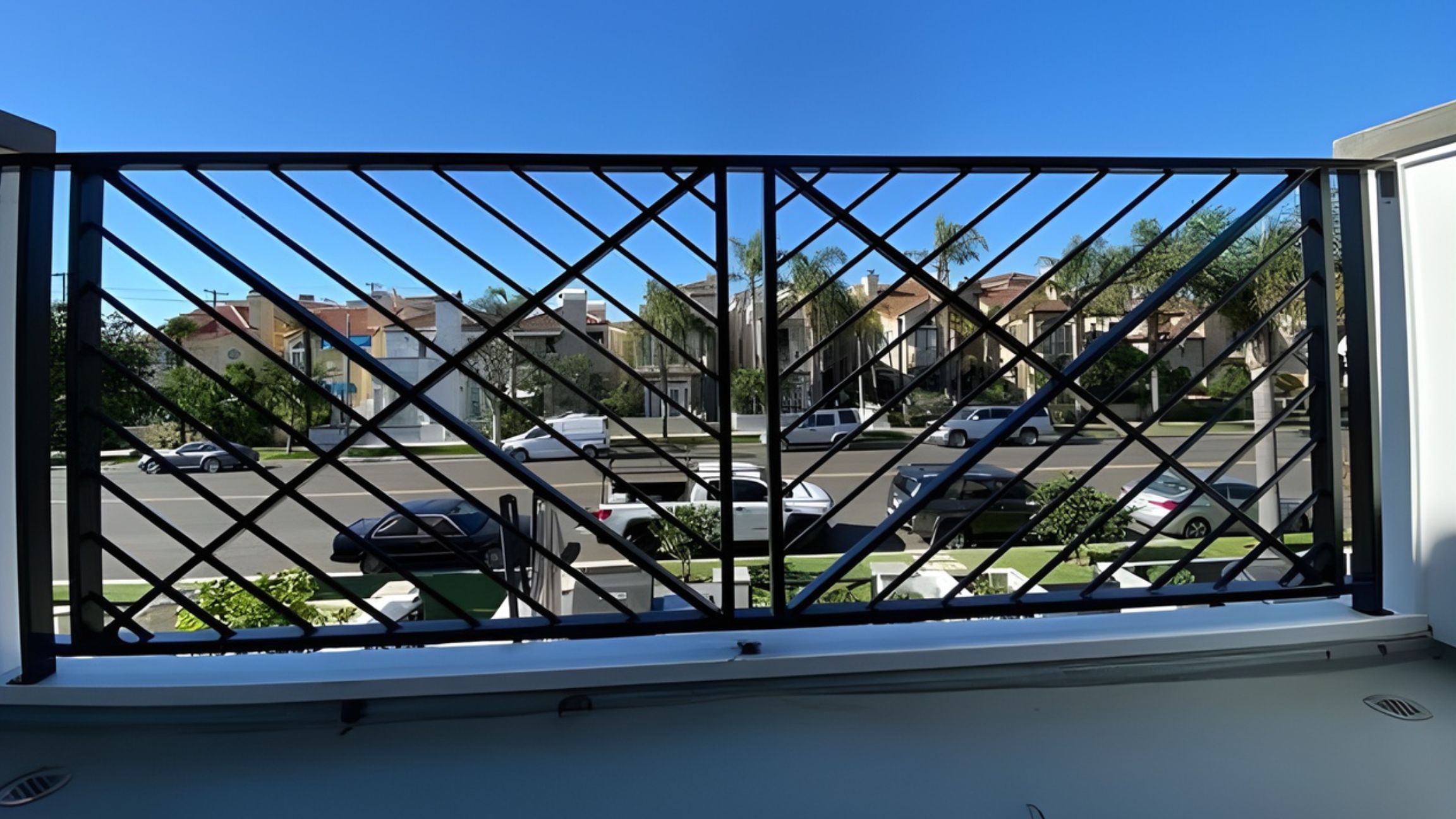
Fully custom architectural steel railings are designed and fabricated specifically for the balcony’s dimensions, exposure, and architectural context. Every element—from post placement to infill type, is defined by function rather than standard profiles.
Why Homeowners Choose It
This approach removes design limitations, allowing safety, code compliance, and aesthetics to work together instead of competing with each other.
Best for:
Balconies with unique layouts, angles, or structural conditions
High-end custom homes or architect-led projects
Properties where off-the-shelf systems don’t meet design goals
Homeowners prioritizing long-term performance over quick solutions
Design & Fabrication Considerations
Material selection is tailored to exposure and maintenance expectations
Custom dimensions ensure proper sightline control and code compliance
Integrated details improve structural continuity and visual flow
Precision fabrication minimizes movement and long-term wear
At this stage, reviewing balcony conditions with a fabricator like Pacific Wood & Iron can help confirm whether a design will meet code and perform as expected.
Seeing the options side by side is helpful, but choosing the right one comes down to how your balcony is actually used and exposed.
How to Choose the Right Steel Railing Design for Your Balcony
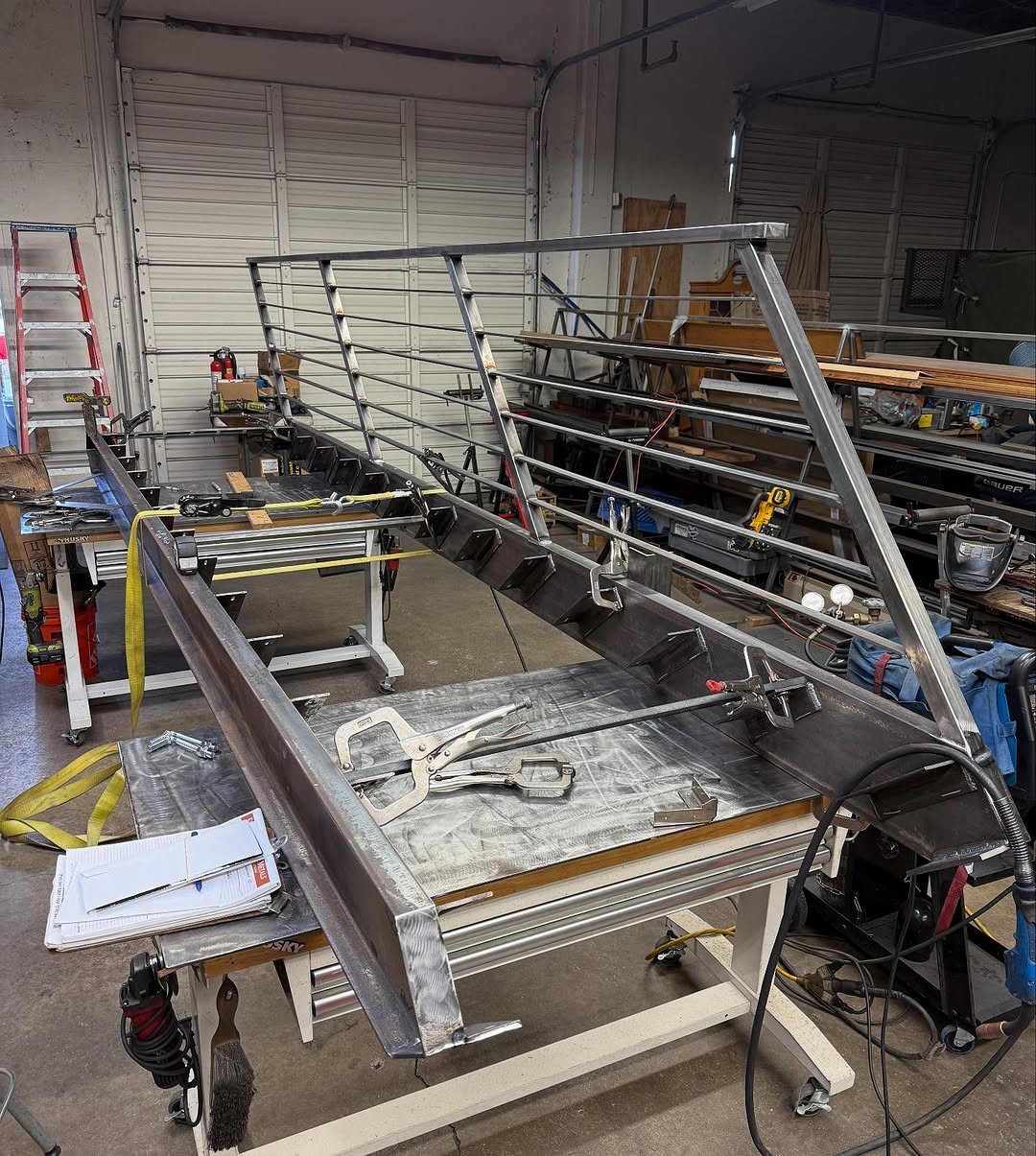
Once you move past visual preference, the right balcony railing choice becomes much clearer. Balconies are exposed, regulated spaces, and small design decisions can affect safety, maintenance, and how the space feels from inside the home.
Instead of comparing styles in isolation, it helps to evaluate them based on real-world conditions: how exposed the balcony is, how much privacy you need, and how much upkeep you’re willing to take on.
The table below is designed to narrow options quickly and steer you toward designs that actually fit your situation.
Balcony exposure | Privacy vs openness | Maintenance tolerance | Code sensitivity | Design priority | Railing styles that typically fit |
High wind and weather exposure | More openness, clear views | Low maintenance | High (strict inspection) | Minimal and unobtrusive | Horizontal steel bars, steel with glass infill |
Moderate exposure | Balanced privacy and openness | Moderate maintenance | Medium | Clean architectural lines | Vertical steel slats, minimal steel frames |
Close neighboring buildings | Higher privacy | Low to moderate maintenance | Medium | Visual screening | Laser-cut steel panels, steel plate railings |
Upper-level living spaces | Maximum openness | Low maintenance | High | Light, refined appearance | Steel with glass infill, minimal steel frames |
Complex or unique balcony layouts | Custom balance | Varies by material | High | Fully integrated design | Fully custom architectural steel railings |
This approach helps shift the decision from what looks good to what works best, reducing the risk of choosing a design that creates issues later.
Once the right steel railing design for a balcony is clear, the next step is ensuring it’s engineered, fabricated, and installed to perform safely over time.
How Pacific Wood & Iron Helps Homeowners Build the Right Steel Balcony Railing
Balcony railings leave very little room for error. They must meet code, handle constant exposure, and still align with the home’s architecture. For homeowners in Huntington Beach, Newport Beach, and Seal Beach, the difference comes down to working with a fabricator who understands that a balcony railing is a permanent safety system—not a decorative add-on.
Pacific Wood & Iron approaches steel balcony railings with that responsibility in mind, guiding projects from design through fabrication and installation.
What sets their approach apart:
Custom fabrication — not pre-engineered systems: Railings are built to the balcony’s exact dimensions, loads, and sightlines rather than adapted from standard kits.
Balcony-specific experience: Elevated applications introduce wind load, deflection, and anchoring challenges that require careful planning and execution.
Design-driven, not trend-driven: Every railing is proportioned to complement the home’s architecture while meeting safety requirements.
Code and inspection awareness: Height, spacing, and structural details are aligned with local building requirements to avoid failed inspections or redesigns.
Materials selected for coastal exposure: Steel types, coatings, and finishes are chosen to perform in sun, salt air, and moisture over time.
Precision fabrication and installation: Clean welds, consistent spacing, and rigid connections ensure long-term stability and a refined finish.
Focus on long-term performance: The goal isn’t just approval at install, but a railing that remains safe, solid, and visually consistent years later.
Homeowners planning a steel railing design for a balcony can request a quote or schedule a call to review design options, code considerations, and site conditions before moving forward.
Conclusion
Balcony railings are one of the few design elements where hesitation usually costs more than action. Waiting too long or choosing based on appearance alone often leads to revisions, failed inspections, or railings that feel wrong once the space is in use.
If you’re already planning changes or building new, having a fabricator like Pacific Wood & Iron review the design early can bring clarity around feasibility, code, and long-term performance without committing you to anything.
That early clarity is often what turns a steel railing design for a balcony from a good idea into a finished result that actually holds up over time.
FAQs
1. At what point should I involve a fabricator in a steel railing design for a balcony?
Ideally before final drawings are locked in. Early input helps confirm whether a design will meet code, handle exposure, and be fabricated without compromises.
2. Can a steel railing design for a balcony be changed later if codes become an issue?
It can, but revisions at that stage are often costly. Adjusting height, spacing, or anchoring after fabrication usually means rework rather than simple fixes.
3. How do I balance safety with keeping my balcony visually open?
The balance comes from choosing the right infill type and spacing. Well-designed steel railings can meet safety requirements while preserving light and views from inside the home.
4. Do steel balcony railings require ongoing maintenance?
Maintenance depends more on coatings and fabrication details than the design itself. Properly finished steel railings are typically low-maintenance, even in exposed conditions.
5. Is every steel railing design suitable for every balcony?
No. Balcony size, exposure, building height, and local regulations all influence what designs are appropriate. What works on one property may be unsuitable on another.